Gulf Property logo

Realty Bytes

GCC

Saudia Hotel revamp brings new Wyndham brand to Riyadh

Wyndham Hotels & Resorts, one of the world’s largest hotel franchising companies, has unveiled Howard Johnson by Wyndham Riyadh Al Nasiriyah, marking the brand’s debut in Riyadh and introducing a newly renovated 99-key midscale hotel to Al Nasiriyah district of the Saudi capital.

Read →
Abu Dhabi

Capstone Real Estate spearheads RNPM in Abu Dhabi with Keyper

Capstone Real Estate, a UAE-based real estate company, has partnered with Keyper to introduce the Rent Now, Pay Monthly (RNPM) digital system to its tenants in Abu Dhabi, providing greater flexibility and convenience in managing rental payments.

Read →
Dubai

Al Mal Capital REIT to distribute over Dh28 million as dividend for H1 2026

Al Mal Capital Real Estate Investment Trust (AMC REIT), the first REIT listed on DFM, regulated by the UAE’s Capital Market Authority, and managed by Al Mal Capital PSC, a subsidiary of Dubai Investments PJSC, has declared a half-yearly dividend of four fils per unit for the first half of the financial year ended 30 June 2026, amounting to a total distribution of Dh28,048,575. The expected payment date for the distribution is 28 August 2026, subject to customary administrative procedures.

Read →
Dubai

Nakheel commences handover of 892 properties Jebel Ali Village

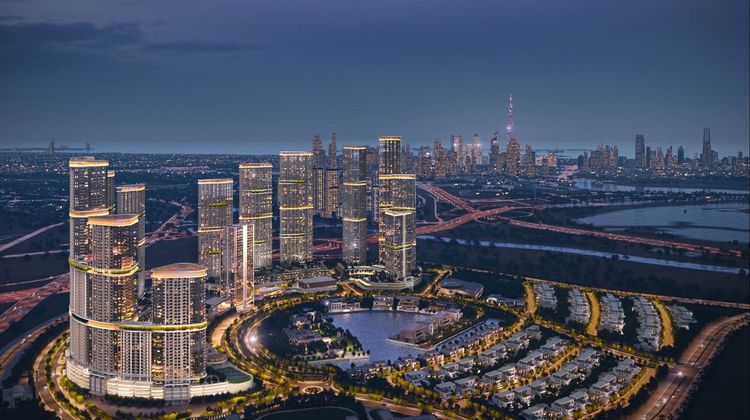
Nakheel, one of Dubai’s mega developers, has begun handing over 892 homes at Jebel Ali Village, as residents start moving into the new 80-hectare residential community. The development is expected to be home to approximately 5,500 residents.

Read →
Advertisement
728 x 90 Leaderboard Ad Box
Trending Emirates

Dubai tenants can opt for flexible rental pay as DLD launches Flexi Rent
Dubai

Dubai tenants can opt for flexible rental pay as DLD launches Flexi Rent

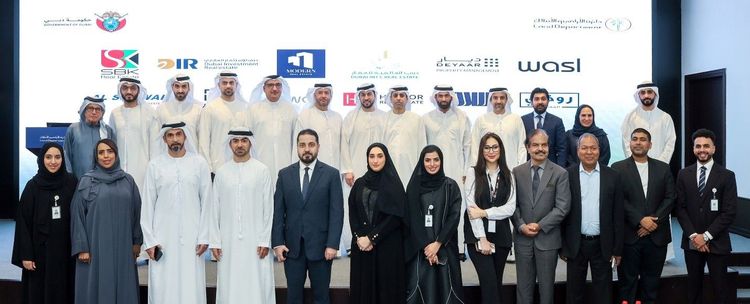
Dubai Land Department (DLD) has announced the launch of Flexi Rent, an initiative that empowers tenants with flexible rental solutions, enabling them to choose from a variety of payment plans, including monthly, quarterly, and semi-annual instalments. The initiative will be implemented across vacant or eligible rental units owned or managed by participating real estate firms including Wasl Properties, Deyaar Property Management, Dubai World Real Estate, Modern Real Estate, Dubai Investment Real Estate, SBK Real Estate, Rocky Real Estate, SRG Properties, Harbor Real Estate, Driven Properties, and Al Showaib Real Estate.

Read →
Danube to deliver 11 projects in Dubai within a year
Residential

Danube to deliver 11 projects in Dubai within a year

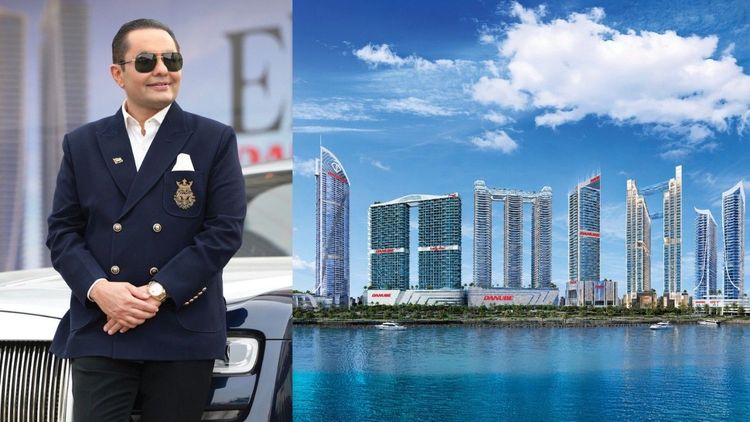
Danube Properties, one of Dubai’s leading property developers, has announced to deliver 11 projects within a year. Located in various areas of Dubai, the delivery pipeline features Elitz 1 & 3 in Jumeirah Village Circle, Sportz in Dubai Sports City, Viewz 1 & 2 in Jumeirah Lakes Towers, Oceanz 1, 2, & 3 in Dubai Maritime City, Fashionz in Jumeirah Village Triangle, and Oasiz 1 & 2 in Dubai Silicon Oasis.

Read →
Sobha Realty announces record delivery in 2026 with handover of 6,819 units
Residential

Sobha Realty announces record delivery in 2026 with handover of 6,819 units

Sobha Realty, a global luxury real estate developer, is set to hand over 6,819 homes worth Dh21.6 billion across Dubai in 2026. The handover pipeline represents the company's largest annual delivery to date, with the value of sales surpassing the combined total of past deliveries.

Read →
Dubai Metro Gold Line likely to fuel property prices in surrounding areas, expert predicts
Dubai

Dubai Metro Gold Line likely to fuel property prices in surrounding areas, expert predicts

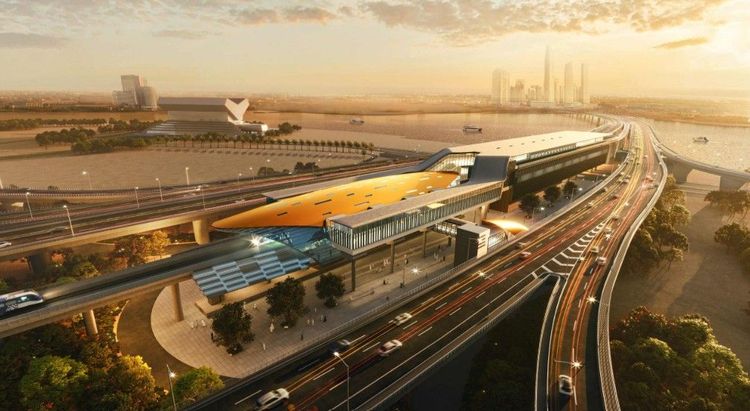
The newly announced Dubai Metro Gold Line will serve 15 locations across the city once it commences operations on September 9, 2032, connecting 55 mega developments that are currently under construction. From Al Ghubaiba to Dubai Production City, the underground metro line will stretch over 42 kilometres and touch 18 stations, connecting areas of the historic old Dubai with more urban communities of central Dubai and luxury destinations further south. As a result, connectivity will drive residential demand, fuelling supply growth, pushing investments, and bolstering value appreciation and rental yield in real estate.\n\nThe line will benefit over 1.5 million people by 2040, transporting 465,000 passengers daily beyond 2040. It will connect to both the Red and Green Lines, while integrating with Etihad Rail.

Read →
Turning homes into wellness systems: Eywa places quality of living at the forefront as UAE’s US$1.4 bn wellness real estate achieves maximum growth in MENA
Residential

Turning homes into wellness systems: Eywa places quality of living at the forefront as UAE’s US$1.4 bn wellness real estate achieves maximum growth in MENA

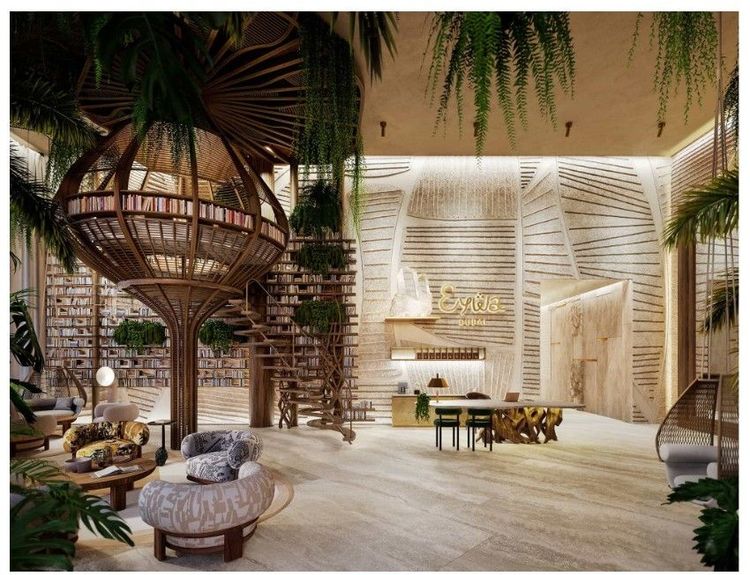
Home, generically, means a place to live. The chronological transformation of home begun from caves and trees to vertical structures that now spear the clouds. Evolution continues, as seen in the UAE, turning homes from just places of living defined by walls to havens that bolster quality of living. Some homes are pushing the spectrum even further by incorporating elements like biophilic architecture and design and sustainable technology that support rejuvenation, comfort, and holistic growth of residents. Wellness has evolved from a buzzword to a significant metric that measures the value of homes in the UAE. As per the Global Wellness Institute Report for 2025, the country saw its wellness economy grow to US$40.8 billion, the fastest in the MENA region. Wellness real estate also flourished in 2024, reaching US$1.4 billion - the highest in the region, registering an average annual growth of 22.8 percent between 2019 and 2024. The rise of the wellness real estate sector is the result of an obvious shift: buyers are becoming more discerning when choosing homes. Beyond location, price points, and the surroundings, they want to understand how the indoor environment will affect their living. They consider external factors that stimulate bodily functions, such as air, water, light, and sound. And developers are responding readily. From biophilic design and eco-friendly technologies to mood-boosting sensorial tools and fitness facilities, developments are incorporating them to meet the demand. Alex Zagrebelny, founder and CEO of R.Evolution, projected that wellness real estate, from what is being perceived as a niche, is turning into one of the most important differentiators in premium residential development. “Health-supportive design, cleaner materials, better air and water systems, and more intentional living environments will increasingly become part of buyer expectations. Globally, wellness real estate is forecast by the Global Wellness Institute to grow from US$584 billion in 2024 to US$1.1 trillion by 2029, so this is not a short-term trend; it is a structural evolution in how people define value in real estate,” he said. R.Evolution, an international boutique developer, is adopting wellness as a core concept within its Eywa-branded projects, Eywa Tree of Life and Eywa Way of Water, in Dubai. Eywa is rooted in principles of building biology, highlighting the correlation between wellness and living spaces. Through architecture and technology, it monitors and regulates air quality, water quality, light exposure, and environmental conditions – functioning as a live system that helps maintain homeostasis or equilibrium in the body. Eywa alludes to Vastu Shastra, the ancient Indian architectural heritage that takes into consideration orientation, spatial balance, flow, proportion, light, and the emotional experience of being in a space. It defines how a space is oriented, how air and light move through it, how private and social zones are balanced, and whether a home feels calming rather than stressful. A hidden 17-tonne pyramid of 1450 crystals and gemstones adorns Eywa Tree of Life, meant to balance energies within living spaces and restore harmony. The implementation of Vastu builds upon stronger evidence for the well-being benefits of many design outcomes associated with healthy buildings - daylight, indoor air quality, thermal comfort, biophilic design, reduced noise, and better environmental quality. In line with WELL standards, Eywa features a silent, energy-efficient air filtration system that sets air quality at the level maintained in hospitals. It traps particles as small as 0.003 microns, including allergens, viruses, ultrafine particles, and other pollutants. A violet light-emitting diode technology (VLED) purification within Heating, Ventilation, and Air Conditioning (HVAC) equipment neutralise bacteria, viruses, and other microorganisms, thereby eliminating the use of chemicals to clean air indoors. At Eywa, water is a “well-being enhancer”. A multi-stage filtration technology at a building-wide level turns ordinary water into liquid crystalline water, which closely resembles the water found in natural springs and living systems. A broad spectrum of contaminants are removed before water reaches residents’ homes, supporting cleaner hydration for drinking, cooking, and bathing. Two types of water are supplied: one as drinking water with a pH level of 6.5, while the second carries a more neutral pH of 7.5 – meant for showers and pools. Eywa’s pools, waterfalls, and large Alfa Omega pools on the amenity terrace are designed to transmit beneficial frequencies and light. Optimised lighting is ensured to align with the body’s internal clock, which regulates sleep. Lighting design, acoustic comfort, and spatial planning at Eywa are structured to support natural sleep cycles and healthy melatonin production, a hormone essential not only for sleep but also for immune function and cellular repair. Technologies like Wi-Fi, mobile networks, and connected devices flood homes with electromagnetic fields (EMFs). Chronic exposure of EMFs affects sleep quality and melatonin production. That’s why bedrooms are equipped with EMF mitigation strategies, including grounded placement of electrical systems, shielding materials, and low-EMF designs. They create sleeping environments where the nervous system can downshift into recovery mode, allowing the body to enter deeper restorative sleep phases and supporting long-term neurological resilience. Environmental psychology and neuroscience both show that access to nature, natural materials, daylight, and calmer sensory environments reduces stress load on the nervous system. Eywa incorporates biophilic designs layered into both common and private spaces, natural textures, water elements, and spatial coherence to create environments that signal safety to the brain. When the nervous system feels safe, the body shifts out of survival mode and into regeneration. This supports emotional regulation, mental clarity, and physiological resilience. Eywa effectively creates an infrastructure to support overall well-being and promote healthier living. However, a question remains. Much of its wellness amenities and monitoring systems use advanced technologies, thereby becoming premium features accessed by elite buyers. As demand for wellness-centric homes grows more mainstream, shouldn’t such systems be adopted by the wider market for an inclusively healthier community? Alex said, “Eywa is intentionally positioned at the ultra-luxury end of the market because it is a project where we wanted to push the model as far as possible and show what fully integrated regenerative living can look like when nothing is treated as an afterthought. But our broader view is not that wellness should remain exclusive. In time, many of the principles behind projects like Eywa should become more mainstream: better filtration, lower-toxicity materials, more thoughtful light and layout, and a clearer relationship between design and human health. “The market is already moving in that direction. What today sits in the luxury category often becomes tomorrow’s new standard. Some projects add a few ‘healthy living’ features as marketing language; Eywa was conceived around a much more integrated philosophy, where architecture, technology, materials, and experience are meant to work together. So yes, I do believe elements of this approach can become more accessible over time, but the full Eywa expression will remain intentionally distinctive.” Branded homes are seeing exponential growth in the UAE real estate. CBRE’s 2025 UAE Branded Residences report found that branded units in Dubai were commanding an average premium of around 64 percent over comparable non-branded units in the same location. When asked whether Eywa’s wellness features make it a lucrative investment asset and influence higher premiums, Alex remarked that Eywa’s appeal is not defined by its wellness features; rather its individual positioning as a project in the broader market. “There is no single market-wide formula that isolates a ‘wellness premium’ with precision, because value in a project like Eywa comes from a combination of factors: limited supply, waterfront location, design distinctiveness, brand positioning, specification depth, and the broader strength of Dubai’s prime market. That said, in Dubai, buyers are already paying meaningful premiums for differentiated branded residences,” he said. Furthermore, he projected Eywa as a unique investment addition to one’s portfolio, calling it “a highly differentiated, low-supply asset in a city with strong international demand and increasing appetite for homes that deliver a fuller lifestyle proposition.”
Emaar Hospitality to unveil its first five-star hotel in Sharjah
Sharjah

Emaar Hospitality to unveil its first five-star hotel in Sharjah

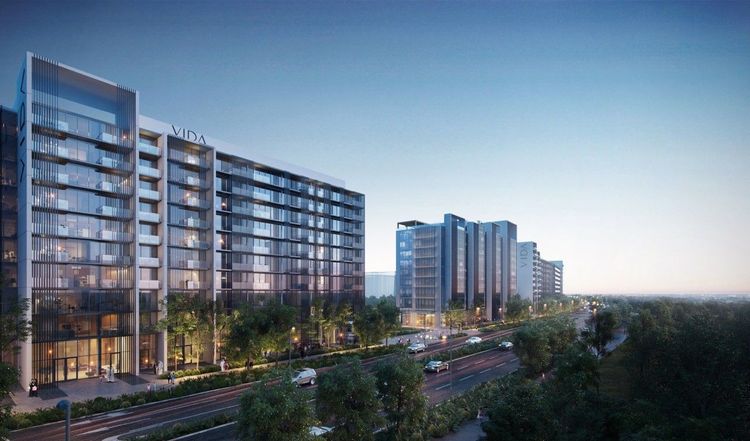
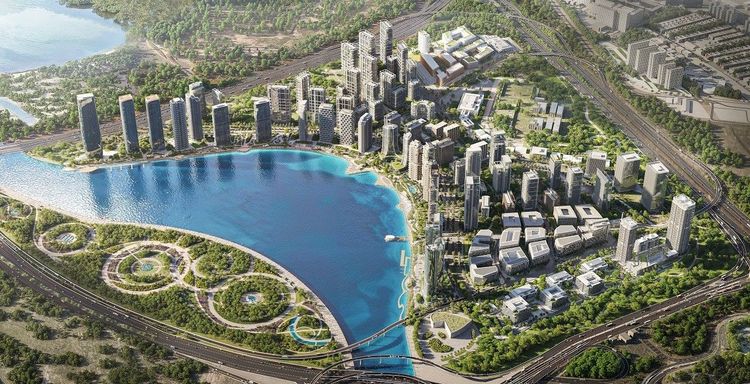
Emaar Hospitality Group, the hospitality and leisure arm of Emaar Properties, is set to unveil Vida Aljada, its first five-star hotel in Sharjah located within the Aljada master development, later this year. The hotel is one of only two five-star Vida properties in the United Arab Emirates. The property will feature a mix of hotel rooms, luxury suites, and extended-stay residences designed to adapt seamlessly between short leisure visits and longer corporate stays. In addition to wellness facilities, guests can access all-day dining settings, café culture, and outdoor gathering areas. The hotel's strategic location offers direct connectivity to key city nodes and transport links, including University City and the Sharjah Airport Free Zone. Vida Aljada is the latest addition to Emaar Hospitality Group’s growing portfolio which consists of 28 hotels with over 5,600 keys across the UAE, Saudi Arabia, Bahrain, Egypt, and Türkiye under premium brands such as Address Hotels + Resorts, Vida Hotels and Resorts, Palace Hotels and Resorts, and Armani Hotel Dubai. Additionally, in partnership with Rove Hotels, the group operates 10 midscale properties with nearly 3,600 keys, while managing 39 leisure assets including championship golf courses at Dubai Hills Golf Club and Montgomerie Golf Club, polo venues at the Dubai Polo & Equestrian Club, and coastal hubs like the Dubai Marina Yacht Club and Creek Marina Yacht Club.

Advertisement
728 x 90 Leaderboard Ad Box

Construction & Mega Projects

Meraas launches 18 million sq. ft. waterfront masterplan at Dubai Design District
Dubai

Meraas launches 18 million sq. ft. waterfront masterplan at Dubai Design District

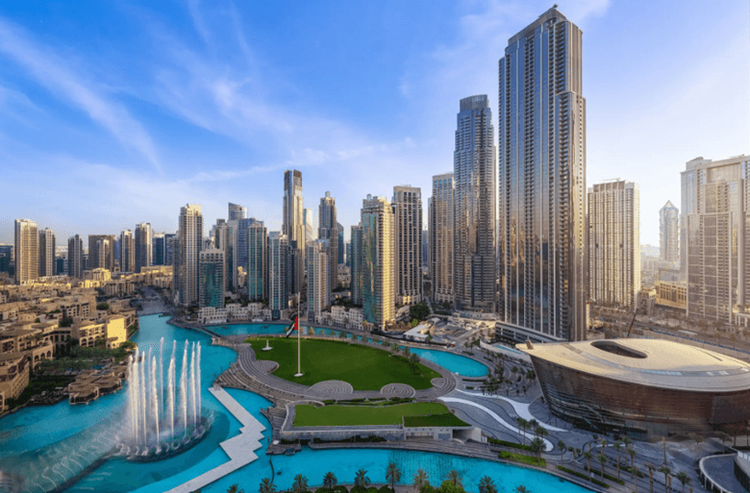
Meraas, a member of Dubai Holding Real Estate, has launched residential masterplan for Dubai Design District (d3). Spanning 18 million square feet of land between Downtown Dubai and Dubai Creek, the development will introduce contemporary canal-front living, cultural quarters, public green spaces, and walkable urban streets, creating a fully integrated community. Designed and delivered by Meraas, the neighbourhood blends residential, cultural, retail, and hospitality experiences, reinforcing Dubai’s ambition to strengthen its position as a global centre for design, innovation, and culture in line with the Dubai Economic Agenda D33. The residential expansion also responds to increasing market demand, following the strong performance of recent launches and growing interest from both local and international buyers seeking design-led, well-connected waterfront communities. A defining feature of the new masterplan is the Design Line, a fully shaded, pedestrian-first spine that connects the entire district. Activated through public art, creative installations, community spaces, and landscaped green corridors, it will support walkable, human-centric living while strengthening d3’s identity as one of Dubai’s most design-forward urban neighbourhoods. The masterplan is also targeting Leadership in Energy and Environmental Design (LEED) Silver community certification, with sustainable mobility, enhanced connectivity, energy-efficient design, and integration with natural landscapes, including visual links to Dubai Creek and the Ras Al Khor Wildlife Sanctuary. Five distinct areas will shape the character of the new neighbourhood. Along the canal, the first will introduce contemporary residences and boutique hospitality set against an activated waterfront promenade. The urban core will unite residential offerings with curated retail and dining, integrated with d3’s established global creative ecosystem. A third area will become the cultural heart of the community, featuring performance venues and mid-rise residences overlooking the d3 Bowl. Another will offer a wellness-focused residential setting defined by parks, sports facilities, and a mangrove-inspired landscape. The final area will become a centre for creativity, with galleries, studios, and loft-style spaces designed to support collaboration, creativity, and artistic production. Khalid Al Malik, Chief Executive Officer of Dubai Holding Real Estate, said, “Expanding the Dubai Design District masterplan into a fully integrated creative neighbourhood is a significant step in advancing the ambitions of the Dubai Economic Agenda D33. This development strengthens Dubai Design District’s position as a global benchmark for design-focused urban living and reaffirms Dubai’s status as a destination of choice for long-term investment, talent and innovation.” Momentum around the district continues to accelerate. Meraas’ recent residential releases at d3 have attracted exceptional demand, including the sell-out of Atelis, a 280-unit waterfront tower, and the successful launch of The Edit, a three-tower development offering 557 homes.

HRE Development begins construction of Sakura Gardens in Dubai
Construction

HRE Development begins construction of Sakura Gardens in Dubai

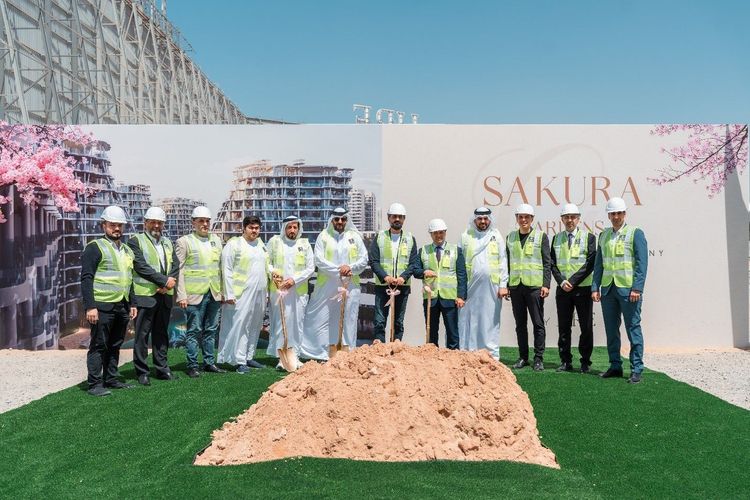
HRE Development has officially broken ground on Sakura Gardens, a Japanese inspired resort-style residential community in Wadi Al Safa 2, Falcon City of Wonders. Project completion and handover is targeted for Q4 2028. Inspired by the Sakura – the Japanese cherry blossom and its enduring symbolism of renewal, harmony, and quiet beauty – Sakura Gardens is designed as a nature-led sanctuary across 49,000 square metres of land, delivering 1,429 fully furnished residences within a low-rise, G+9 development centred around a car-free central park spanning 30,000 square metres. Fifty percent of the project's footprint is dedicated to landscaped green space, setting it apart in a market where density has long dominated. Mohamed Adib Hijazi, Chairman of HRE Development, said, “Sakura Gardens was conceived as a response to what modern residents in Dubai genuinely want: space, nature, connection, and a home that supports their wellbeing. We are proud to see that vision take physical form today." The community will feature over 50 amenities, including a beach-style lagoon pool, rooftop gym, wellness pavilions, padel and basketball courts, running and walking trails, themed children's areas, floating coffee kiosks, and full smart home automation across all units. The project also features EV charging infrastructure and a broader commitment to sustainable design. Wadi Al Safa 2 has undergone a significant transformation in recent years, evolving from an emerging district into a recognised lifestyle and investment destination within Dubai's expanding residential belt. Sakura Gardens arrives at a moment of maturation for the area — well connected to Sheikh Mohammed Bin Zayed Road (E311) and positioned to benefit from continued infrastructure growth and rising occupier demand.

Foundation works advance at world’s second tallest tower
Construction

Foundation works advance at world’s second tallest tower

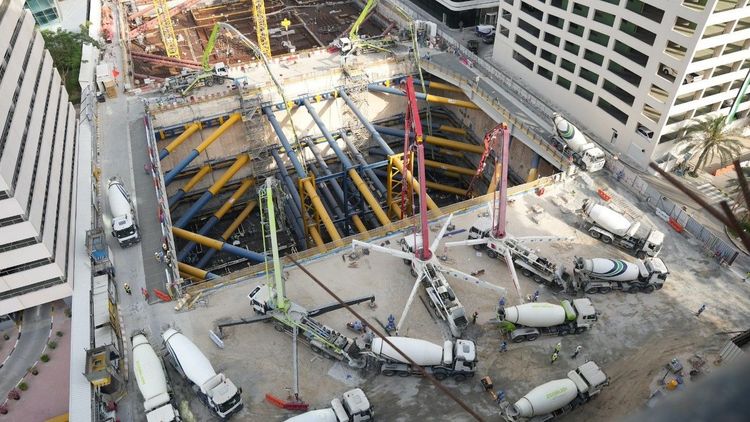
Azizi Developments, a leading developer in the UAE, has shared progress of Burj Azizi, its tallest development to date and the second tallest building under construction globally. Works are progressing across both the raft foundation of the main tower and the automated car park building: two of the most engineering-intensive phases in the build. Burj Azizi’s car park building extends nine basement levels and reaches almost 30 metres below. Over the course of just 40 hours, more than 200 workers and 700 trucks delivered 7,000 cubic meters of concrete to form the structure that will house Burj Azizi's fully automated parking system. In parallel, work continues on the tower's raft foundation, a continuous concrete slab five metres thick, engineered to bear and distribute the full load of the 725-metre, 140-storey structure. With 750 workers on-site daily, the team is delivering this critical phase with precision and an unwavering commitment to safety, laying the structural basis from which Burj Azizi will rise. Farhad Azizi, Group CEO of Azizi Group, said, “Burj Azizi is set to stand as the world’s second-tallest tower, a defining global symbol of Dubai. That ambition demands absolute rigor at every level, from concept to completion. The raft foundation, while unseen, is fundamental to the structure’s integrity. It is being delivered to the level of engineering precision this scale requires, setting the standard for everything that follows.” Apartments range from one to three bedrooms, with ultra-luxury penthouses occupying the upper residential floors through their own dedicated lobbies. Amenity levels are spaced throughout the tower, offering residents pools, a spa, a gym and yoga centre, a cinema, a games room, dining, and retail. Higher still, an all-suite, seven-star hotel draws on seven cultural themes to set a new benchmark in luxury hospitality, featuring culturally inspired restaurants, an authentic Emirati dining concept, a luxury ballroom, and a beach club. The Burj Azizi project is led by Executive Director Kang Sang Ku, whose 30-year engineering career includes landmark developments such as the Burj Khalifa. Under his oversight, Azizi's approach to a project of this magnitude begins long before construction reaches ground level. For major developments, the developer conducts full-scale mock-ups and factory-based testing before a single unit goes up. Azizi’s vertically integrated approach also ensures complete control and consistent quality from concept through long-term operation. Upon completion in 2030, the tower will soar to 725 metres – only 103 metres shy of the height of Burj Khalifa, the reigning edifice at present. If current rankings are retained by the time it is built, the building will secure the third position, overtaking skyscrapers like Merdeka 118 in Kuala Lampur and Makkah Royal Clock Tower in Saudi Arabia. Burj Azizi will also claim several world records, including the highest observation deck on level 130, the highest hotel lobby on level 111, the highest nightclub on level 126, the highest restaurant on level 122, and the highest hotel room on level 118. At the top, a museum will chronicle the tower’s evolution through multimedia exhibits recognising the people and milestones behind its construction.

Disneyland: Leisure haven eyed to be Abu Dhabi’s mega economic booster
Tourism

Disneyland: Leisure haven eyed to be Abu Dhabi’s mega economic booster

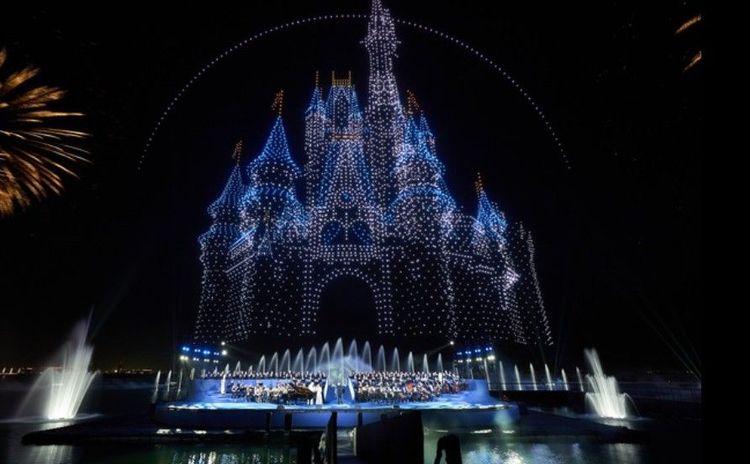
Disney’s latest theme park announcement will turbo-charge Abu Dhabi’s efforts to amp up its tourism and carve a niche on the globe. The venue is set to not only bring a wave of childhood nostalgia to adults who grew up watching Disney classics and showcase its legacy to children of this generation, but also will be a vital impetus for the capital’s economy. With only six such enthralling parks in the world, Abu Dhabi will proudly host the seventh wonder and the first of its kind in the Middle East, Africa, and a large portion of Asia. This strategic move brings Disneyland closer to a substantial global population, around 4.8 billion people, while solidifying Abu Dhabi’s position on the tourism map.