
Portfolio defined by purpose: unravelling Fakhruddin’s vision for healthier living
NASA-grade air, in-built hydration system, hydo-harvesting and a greenhouse café – these are the hallmark features defining a developer’s projects in Dubai. The purpose? To promote healthier living and serve the greater good. Fakhruddin Properties, a developer with roots in the UAE since 1963, stands out in Dubai’s vibrant realty by combining conscious living with sustainable practices and trailblazing technologies to deliver one of man’s most treasured investments: homes.
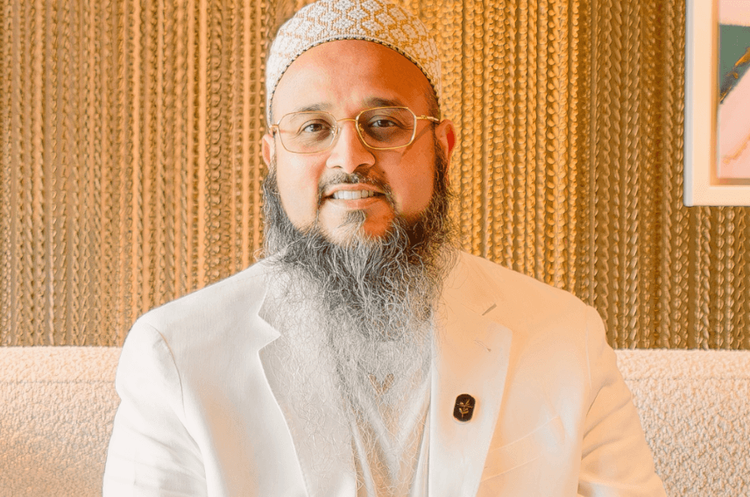
In an exclusive interview with Gulf Property at the International Property Show, Yousuf Fakhruddin, CEO and Managing Partner of Fakhruddin Properties, revealed that integrating eco-friendly and wellness practices into a building’s core design resulted from a market gap that was not addressed by other developers. In addition to appealing to buyers, the practices emulate the company’s long-standing business ethic – choosing a purposeful way of doing things.
“None of the other developers are integrating anything what we are doing. They're not talking about centralised water systems, plastic saving, waste management, best air quality and AI-enabled home automation to reduce the energy and at the same time deliver better comfort.”
Tréppan Living, a wellness concept that embraces a fully integrated intelligent living ecosystem encompassing smart automation, sustainability and community-driven experiences, is the driving force behind four of Fakhruddin’s projects: Tréppan Vision, Tréppan Living Privé, Tréppan Serenique and Tréppan Tower.
Each Tréppan residence is equipped with Airocide, a NASA developed purification technology that generates cleaner air. Mineral-rich water is supplied directly from a building’s central system, thereby eliminating the use of plastics. Smart home automation ensures optimal living. A greenhouse café encourages residents to grow their own plants with organic waste, supporting a conscious community with low carbon footprint.
Waste segregation at Fakhruddin’s developments is a meticulously curated process. It involves separation of dry and wet wastes, composting in the building and the segregation of plastic and paper which are ultimately sold off. Compared to other buildings, at most 10 percent of the waste generated ends up in landfill sites.
A loyalty programme disguised as an awareness initiative prompts residents to actively participate in the building’s conservation practices.
“For example, the waste segregation,” Yousuf explained. "Tenants are required to do a simple task which is segregate the dry and wet waste. It is compulsory, but not a difficult thing to do,”
“Each apartment will be tagged through QR-coded bags. And when they put it in the chute, they have to select dry and wet waste. We scan those bags, know which resident has done it and reward them with points. They can then utilise that in our greenhouse café.”
The greenhouse café hosts hydroponic plants that residents can grow and consume. The process also supports an oxygen-rich environment, Yousuf added.
But do these features push up prices of homes? The CEO said that the cost to build such homes are far more expensive.
“We are putting a lot of technology into it. There's a central a water plant and a specialised air conditioning system in our building. There are air quality monitoring sensors in every apartment. There's a greenhouse cafe itself.
“We are taking space away from the sellable area and adding to the general area. So that is a huge cost, along with the equipment and the robotics.”
In fact, price points are maintained at the market average, with the developer enjoying a decent margin.
“If I compare myself to a good developer, our prices are very competitive. Our margin, Alhamdulillah, is good, but definitely less than the others.”
The developer prefers to stay grounded, creating homes that it can deliver. The company has built its presence gradually in the market, with each project receiving individual attention.
“We are debt free company. So, there is no debt cost to us at all. Even the payment plan is from our cash flows.
“We only develop what we can deliver. You don't see us doing 100 projects. We've grown gradually,” he concluded.
Fakhruddin Properties currently has six projects that are being constructed and sold, with over 2,000 units on sale in Dubai. Its global portfolio scales Europe and Africa, including six developments in the UK and 12 in Uganda.
Ends