
Global Tall Tower landscape changes
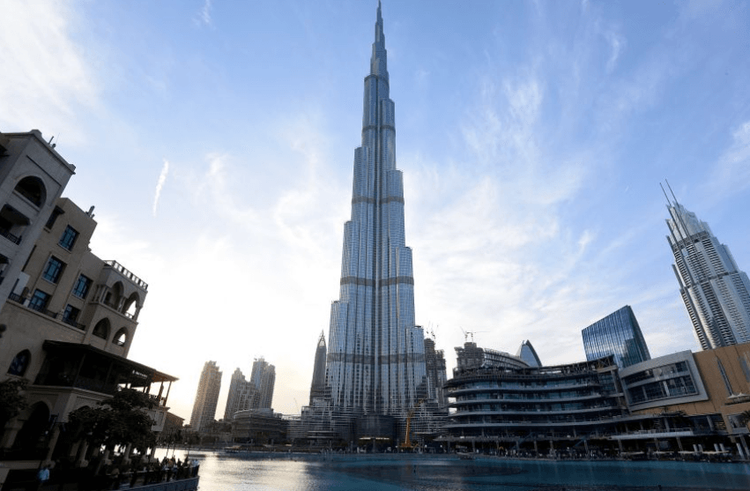
The urban built environment is rapidly changing throughout the world - moving from horizontal to vertical concentration in the megacities worldwide due to the growth of the educated middle class population across Asia, Africa, Latin America, Middle East and Far Eastern regions, according to Council on Vertical Urbanism, the global market intelligence provider on tall towers.
More than 4.7 billion people, or 56.6 percent of the 8.3 global population, currently live in urban environment - towns, cities and mega-cities. These urban population live in approximately 2.75 billion buildings scattered across the globe, according to Global Building Atlas database.
The urban population is expected to increase to 70 percent of the global population by 2050 – which could bring challenges to the built environment in the coming decades.
“Projections show that urbanisation, the gradual shift in residence of the human population from rural to urban areas, combined with the overall growth of the world’s population could add another 2.5 billion people to urban areas by 2050, with close to 90 percent of this increase taking place in Asia and Africa,” a new United Nations report said.
Currently, more than 7,000 skyscrapers taller than 150 metres (492 feet) grace the skyline of the mega-cities worldwide, according to data from Council on Vertical Urbanism (CVU).
Buildings and construction represent 11 to 13 percent of the global Gross Domestic Product (GDP), according to the UNEP.
China leads the world with over 3,300 to 3,500 skyscrapers located in cities including major hubs like Shenzhen, Shanghai and Guangzhou, followed by around 900 in the United States and about 340 in the UAE, mostly in Dubai.
Although the race for tall structures was led by the United States by developing the 381-metre-tall Empire State Building in New York City in 1930 that was further strengthened by the skyscrapers in Chicago, when Dr Fazlur Rahman Khan, a Bangladeshi-American structural engineer, led the structural team to build Willis Tower (formerly Sears Tower), the movement then shifted to Asia with the emergence of China which led a massive urbanisation drive due to its industrial development around the Pearl Delta River and Shanghai.
For decades, Asia has been the global epicentre of vertical urban growth. No other region has reshaped its cities and urban economies through tall buildings as profoundly or as rapidly. Across the continent, cities are pairing extraordinary population growth with ambitious density strategies, producing some of the world’s most complex and innovative urban environments.
In the greater Shenzhen-Guangzhou region alone, almost 300 buildings above 200 metres have been completed since 2000, and half of the megacity's 301 buildings at that height have completed since 2020.
In Mumbai, the rapid vertical expansion of the urban core has taken off in the same fashion, and the city has seen its 200 m+ building stock triple since 2020, with buildings at lower heights proliferating even faster.
China currently hosts 3,492 skyscrapers that rise above 150 metres including 1,267 towers that rise above 200 metres and 122 SuperTall towers that are at least 300 metres or more. This is followed by the United States and the UAE – where the race for the skyscrapers is dominated by Dubai.
Globally, the world has completed a total of 2,593 two-hundred-metre-plus (200 m+) buildings and 255 supertall (300 m+) buildings through 2025. The number of 200 m+ buildings worldwide has now doubled since 2017, and another 384 are currently under construction.
The 141 completions in 2025, marginally higher than the prior year, marked a 2.2 percent increase from 2024. This was the 12th consecutive year with over 100 completions.
China continues to lead annual 200 m+ completions. Of the 2,593 such buildings in the world, 1,362 are in China.
New York City and Hong Kong both surpassed 100 complete 200 m+ buildings in 2025, becoming the third and fourth cities to do so. Shenzhen became the first city to surpass 200 such buildings.
Shenzhen became the first city to surpass 200 complete 200 m+ buildings. The surrounding urban agglomeration, collectively referred to as the Pearl River Delta, surpassed 300 completions.
As of the end of 2025, 222 cities in 52 countries have at least one complete 200 m+ building.
An additional 23 cities in three countries have at least one under-construction 200 m+ building.
Asia continues to lead with 62 buildings in the World's 100 Tallest, an increase of one from 2024.
The Middle East slipped to 18 buildings (down from 19), and North America (14), Europe (5) and Africa (1) stayed the same.
Three new all-office buildings joined the 100 tallest in 2025, displacing two mixed-use and one all-residential building.
Average height of all 2025 completions were at 238 metres, which is 2.9 percent higher compared to 2024.
In light of this increase, 2025's new additions to the World's 100 Tallest Buildings increased the average height of that group to 414.2 metres. A total of seven buildings entered the 100 tallest in 2025, including JPMorganChase Tower, New York City, at 423.06 metres; Zijin Financial Building, Nanjing, at 416.60 metres; Ningbo Center Tower 1, Ningbo, at 409.00 metres; China Merchants Bank Global Headquarters Main Tower, Shenzhen, at 393.00 metres; Guangdong Business Center, Guangzhou, at 375.50 metres; Three International Trade Center Tower B, Shanghai, at 369.70 metres; and Xiamen Cross Strait Financial Centre, Xiamen, at 343.88 metres.
These developments are taking place at a time when the world is also reeling from housing shortages, that further complicate the situation.
Global housing deficits increased from 251 million units in 2010 to 288 million in 2023, while forced displacement continues to rise due to conflict, violence, human rights violations and climate-related disasters. Research conducted by UN-Habitat estimates that approximately 64 million people were evicted globally between 2003 and 2023, with severe consequences for livelihoods, security and social well-being.
2026 Outlook
As CVU surveys the tall building landscape for 2026, there continues to be a record number of 200 m+ projects on hold globally (115).
Of these, 88 are in China, where curtailed financing has led to the high-profile difficulties for real estate developers in the post-pandemic era. As many of these projects have made substantial upward progress, they will likely complete eventually, but the outlook for 2026 thus far is characteristic of 2024 — a decrease in overall completions from the peak in 2023.
There are 384 buildings over 200 metres that are currently under construction or topped-out, and 84 of those are SuperTalls. Two MegaTall (600 metres or taller) buildings, including the Jeddah Tower that is slated to rise up to 1,000 metres, and Burj Azizi, 725 metres, are under construction, and both are slated for 2030 completions.
Given the growing number of stalled tall building projects, CVU conservatively estimates at least 140 buildings of 200 metres and higher to complete in 2026; of these, we expect at least 18 to be SuperTalls.
Largest City
Jakarta, with 41.9 million residents, is now declared the world's largest city by the United Nations. It has outgrown 36 of the world's 233 countries in terms of population, and is now home to almost as many 200 m+ buildings as all of Japan.
Together, these shifts highlight Asia’s singular role in defining the future of vertical urbanism: where demographic momentum, economic ambition and spatial constraint converge to generate new models of dense vertical living.
This interactive data study explores recent tall building activity in Asia in context with its largest cities' urban growth over the past 50 years.
Although the focus remains on the largest and most prolific tall building cities, new entrants are emerging rapidly. At the 200 m+ level, 126 cities across Asia now have at least one completed building, and 106 of those (84 percent) have just completed their first in the last decade.
In addition to the 1,791 complete 200 m+ buildings in Asia, CVU is also tracking 531 such buildings under construction and a further 272 in the development pipeline.
Top Cities for Skyscrapers
Hong Kong leads the global list of cities with the highest number of skyscrapers, followed by Chinese city of Shenzhen. Dubai leads the Middle East, Africa and Europe regions, ranking third ahead of New York and London.
Following is the list of individual cities with the most 150m+ buildings:
Hong Kong - 560+
Shenzhen - 465+
Dubai - 330+
NYC - 320+
Mumbai - 270+
Top Countries with the Most Skyscrapers
The race for the skyscrapers had initially been led by the United States with the development of the Empire State Building in the 1930s. The US dominated the vertical urban development for more than 50 years till a resurgent China gradually started to take the leadership in the 1990s. China currently leads the race with 3,492 skyscrapers, followed way behind by the United States with 905.
However, the remarkable rise in the race for skyscrapers has been that of the UAE, led by Dubai. The UAE now has 342 skyscrapers with Burj Khalifa standing tall as the tallest tower in the world.
1. China: With 3,492 buildings over 150 metres tall, China is the skyscraper capital of the world. What’s even more mind-boggling is that China has 1,267 buildings over 200 metres and another 122 over 300 metres tall. The Shanghai Tower is the country’s tallest building, ranking third in the world at 632 metres tall.
2. United States: The U.S. ranks second in terms of skyscrapers, with 905 buildings over 150 metres and 246 over 200 metres tall. There are 31 super-tall buildings over 300 metres, including One World Trade Center, which is 541 metres and the seventh tallest in the world.
3. United Arab Emirates: The UAE boasts 342 buildings over 150 metres and 158 skyscrapers at 200 metres or taller. The nation’s 37 super-tall skyscrapers include the world’s tallest Burj Khalifa and the Marina 101 which stands 425 metres high.
4. Malaysia: Malaysia’s skyscraper landscape includes 319 buildings over 150 metres, 73 over 200 metres and six upwards of 300 metres. Malaysia’s tallest skyscraper is Merdeka 118 in Kuala Lumpur—a stunning 678.9-metre tower that’s now the second tallest building in the world, right behind Dubai’s Burj Khalifa.
5. Japan: Japan’s major cities account for 283 skyscrapers over 150 metres and 51 over 200 metres. Only two are classified as super-tall buildings over 300 metres, and those are Azabudai Hills Mori JP Tower, coming in at 325.5 metres, and Abeno Harukas in Osaka, at 300 metres tall.
6. South Korea: South Korea boasts 281 buildings over 150 metres, 80 over 200 metres and seven upwards of 300 metres. The country’s tallest building comes in at 555 metres, with Lotte World Tower currently the world’s sixth-tallest building.
Rounding out the top 10 countries with the most total skyscrapers 150 metres or taller are Canada with 224, Australia with 226, Indonesia at 193, and Thailand with 187.
Country Skyscraper Height
150+m 200+m 300+m
China 3,492 1,267 122
USA 905 246 31
UAE 342 158 37
Malaysia 319 73 6
Japan 283 51 2
South Korea 281 80 7
Canada 178 46
Australia 163 61 2
Thailand 144 40 3
Indonesia 139 52 2
Philippines 130 42
India 127 46 1
Singapore 100 34
Turkey 79 16 1
Brazil 72 4
Panama 67 25
Russia 61 24 7
Qatar 55 30 3
Mexico 52 13 1
Saudi Arabia 44 26 5
Vietnam 43 9 2
Ends