
Office rentals surge in Dubai and Abu Dhabi, retail sees moderation in Q1 2026
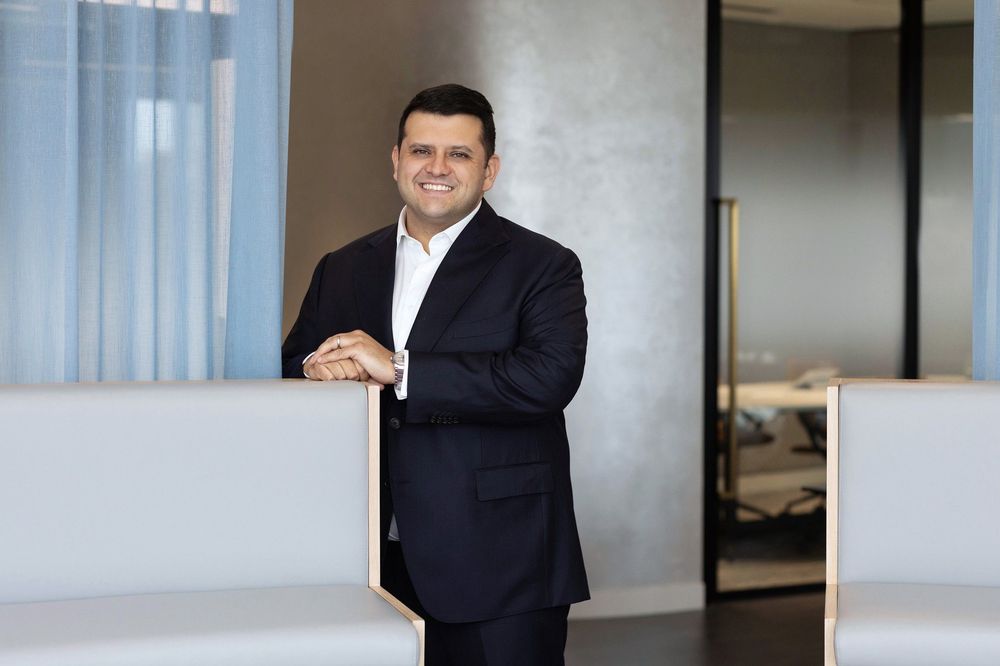
The commercial real estate in Abu Dhabi and Dubai exhibited a mixed performance in Q1 2026, with the office sector seeing improvements compared to retail. Owing to the recent geopolitical uncertainty, retail took a hit, particularly the segments catering to tourism-dependent categories. According to Jones Lang LaSalle’s (JLL) Real Estate Market Dynamics report, rental rates in the UAE office sector demonstrated sustained growth momentum, with both Dubai and Abu Dhabi posting double-digit annual growth amid tight vacancy conditions, reflecting sustained occupier demand and constrained supply dynamics. Prime office rents in the capital saw maximum year-on-year appreciation of 11.7 percent, while Grade A and Grade B spaces were up 5.1 percent and 4.2 percent, respectively. Limited availability of prime space in Dubai’s core business districts saw occupiers turn to Grade B alternatives, and this segment led rental appreciation by 23.4 percent year-on-year, followed by Grade A at 19.0 percent and prime at 17.2 percent. Office inventory reached 101.1 million square feet in Dubai. Abu Dhabi’s total office stock expanded to 4.18 million square metres. Vacancy rates remained exceptionally tight, with Abu Dhabi citywide at 1.4 percent and prime at 0.1 percent. Following new building deliveries, Dubai’s citywide vacancy rose to 7.3 percent while prime edged up marginally to 0.7 percent. On the other hand, first quarter office rental contract registrations in both Abu Dhabi and Dubai recorded year-over-year declines of 6.0 percent and 7.7 percent respectively. Monthly new contracts declined 19.7 percent in Abu Dhabi and 20.6 percent in Dubai in March, compared to February 2026. However, Dubai showed resilience, posting an 11.2 percent increase in renewals in annual terms, confirming existing occupier confidence despite cautious new commitments. While global supply chain pressures impact development activity, developers are responding through strategic sourcing arrangements, phased procurement planning, and ongoing contractor negotiations to manage challenges. Looking ahead, transaction momentum is expected to strengthen with compelling market prospects sustained by limited prime stock. The retail sector in Dubai citywide vacancy tightening to 4.8 percent as existing retail inventory stood at 56 million square feet. Abu Dhabi maintained a stable vacancy rate of 8.9 percent. Government support measures, including the Dh1 billion stimulus package, and landlord flexibility on lease structures such as turnover-rent models and short-term rent relief, were crucial in sustaining occupancy and preserving retail ecosystem stability. Rental rates of super-regional malls in Dubai recorded strong performance at 12.4 percent annual growth, with prime super-regional properties exhibiting moderate growth of 1.7 percent. Abu Dhabi's prime super-regional malls sustained premium positioning at Dh5,524 per square metre, driven by selective tenant demand. New rental contracts declined 9.9 percent year-on-year in Dubai. Abu Dhabi, however, recorded growth in total registrations, up 3.6 percent year-on-year, supported by new contracts rising 16.7 percent. Negotiations increasingly focused on flexible deal structures like occupancy-cost-ratio (OCR) and turnover-rent (TOR) models. The current environment presents opportunities for retailers to diversify revenue sources and enhance domestic market capture through innovative strategies such as pop-up retail destinations and experiential offerings targeting resident demand. Community and neighbourhood centres are expected to maintain resilience. While prime, super-regional, and regional malls may face near-term headwinds if tourism remains constrained, experiential concepts, home-grown retailers, and wellness-focused offerings are well-positioned for growth as consumers prioritise mental and physical wellbeing. Taimur Khan, Head of Research, MEA, JLL, said, “With strong underlying economic fundamentals and agile occupier and landlord strategies, the UAE’s office and retail sectors demonstrated remarkable resilience and a strong capacity for strategic adaptation as they navigated measured activity in the first quarter. Despite short-term adjustments, demand remains robust, signalling the market’s inherent strength and positioning it for sustained growth as demand for prime spaces accelerates amid tightening supply.”