
Buyers contribute to Dubai realty rebound in July amid regional crisis
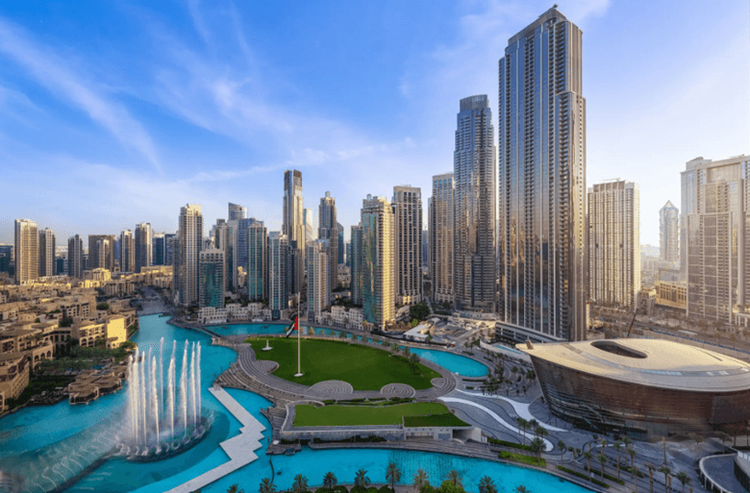
While the ready unit market in Dubai achieved pre-war sales record in July, the off-plan sector dominated the market, accounting for 74 percent of monthly transactions so far. Property consultancy Cavendish Maxwell revealed that combined sales in July reached 12,860 transactions worth Dh26.1 billion. Sales topped Dh247.2 billion across 92,130 transactions from January to July 2026 - exhibiting a drop of 21 percent and 17 percent respectively year on year from H1 2025.
More than 3,400 ready residential properties, with a sales value of Dh9 billion were purchased in July, compared to around 2,870 sales worth Dh7.5 billion in June, signalling an upward trajectory for the rest of the year.
While regional tensions persist, Dubai’s real estate buoyancy has bolstered the market to reach one of the highest levels this year. This raises an appropriately-timed question about trends that are driving capital into the market. What is propelling investors to buy homes amid the crisis? And how well are developers equipped to satiate market demand while curtailing expenses without compromising on quality? Industry experts decode the market trends.
Buyers have become increasingly discerning while making decisions. This can be attributed to the variability in properties throughout Dubai, which offers some of the world’s most luxurious investment opportunities in prime neighbourhoods to affordable living options in commercially active zones, attracting a wider spectrum of buyers ranging from investors, families, professionals, and high net worth individuals (HNWIs).
Furthermore, with more developers foraying into Dubai, choices are diversified. As many as 186 developers entered Dubai between January and July this year, which emphasises confidence in the real estate business.
Abdulla Lahej, Chairman of Amaal, said, “As new residential supply enters the market, buyers are becoming more selective and looking beyond attractive concepts. They want confidence in delivery, quality, and long-term value. For developers, adapting to this evolving environment requires a more strategic approach to every stage of development. Rising construction costs, limited availability of prime land, and increased competition make it essential to plan efficiently, optimise resources, and create projects that offer a clear reason for buyers to choose them.
“Moreover, innovations such as real estate tokenisation are creating more accessible investment opportunities, aligning with Dubai’s move towards a more digital and inclusive property market. Our collaboration with IOPn to explore tokenised property solutions reflects how the sector is evolving towards more accessible investment models. Developers who embrace innovation while maintaining strong delivery standards will help shape the next phase of Dubai’s real estate growth.”
Besides external costs such as land, construction, and materials, developers in the ultra-luxury segment are facing an extra layer of pressure as high net worth buyers look for additional value in the form of experiential living, wellbeing, and property longevity alongside default luxury amenities. Projects like Eywa amalgamate biophilic architecture, sustainable technology, and wellness concepts to create environments that support healthier living.
Igor Karpikov, Chief Commercial Officer at R.Evolution, said, “In the ultra-luxury segment, cost and location discipline alone no longer define an edge. Buyers are increasingly seeking residences that enhance their wellbeing, support longevity, and deliver lasting value through purposeful design and meaningful experiences. This shift is reflected in the UAE's wellness real estate market, which grew from US$3.3 billion in 2017 to US$14.6 billion in 2025, according to the Global Wellness Institute — underlining the growing demand for homes that actively contribute to healthier lifestyles.
“The developers who will lead the market are those who move beyond conventional luxury by embedding wellness, sustainability, innovation, and exceptional craftsmanship into the DNA of every project, rather than treating them as standalone features.
“At Eywa, we have embraced this shift by creating a wellness-led residential ecosystem where biophilic architecture, advanced environmental technologies, and longevity principles come together to support healthier, more fulfilling lives. As buyer expectations continue to evolve, true differentiation will come from creating homes that deliver long-term value through wellbeing, purpose, and an experience that extends far beyond traditional luxury.”
Meanwhile, developers resort to a study-led approach when building communities. They analyse the market in a particular area, identify demographics, and design projects as per the demand.
Areas like JVC and JVT, which largely cater to families and professionals looking for affordable options with accessibility to neighbourhood amenities like retail, entertainment, health, and education, are characterised by residences with varying layouts and sizes to accommodate the market’s needs.
Ali Mussallam Bu Mansour, Managing Director at Object 1, said, “In Q2 2026, off-plan homes accounted for 76% of residential transactions, showing that buyers are willing to commit to projects under development when the concept, payment structure and delivery plan are clear. As the market expands, maintaining this confidence requires developers to create homes that offer lasting quality and practical value.
“This begins with a precise understanding of who will live in each building and how their needs may evolve. At Object 1, we study demand patterns to balance established communities such as JVC and JVT with growing districts including Dubai Land Residence Complex. This research guides decisions around land, unit sizes and shared spaces, helping each project respond to the character of its location and the expectations of its future residents.
“Careful planning also allows developers to manage construction costs while protecting the quality of the finished building. Early procurement, efficient design and close coordination between development and construction teams provide greater visibility over budgets and timelines. Object 1’s integrated in-house capabilities support this process by connecting design decisions with construction requirements from the earliest stages of a project.
“The same level of discipline strengthens access to financing. Clear feasibility studies and payment plans connected to construction progress give lenders, investors and buyers greater confidence in the delivery programme. In a more selective market, the developers that maintain a competitive edge will be those that combine financial discipline with a long-term view of the people who will occupy their buildings. Every project should be designed for residents who may still call it home twenty years from now, making durability and everyday usability central to its value.”
Smart planning promotes effective financing decisions and curbs extra costs. When a project is smartly managed, from concept and design to construction and delivery, developers can focus on delivering quality results while ensuring data transparency across every phase.
Ibrahim Imam, CEO and Co-founder of real estate management software PlanRadar, said, “Dubai’s real estate market continues to grow at a remarkable pace. The Dubai Land Department reported strong figures in Q1. At the same time, developers are operating in an increasingly cost-sensitive environment, with Turner & Townsend forecasting construction inflation of around 5% in Dubai in 2026.
“In this environment, maintaining a competitive edge is not only about launching more projects. Developers need to focus on delivering projects with greater efficiency, predictability and quality.
“While factors such as land availability, financing conditions and material costs are not always within a developer’s control, the way projects are managed is. Better visibility across project progress, approvals, documentation and quality can help teams identify issues earlier, reduce avoidable rework and make faster, better-informed decisions.
“This is where digitalisation can make a practical difference. Connecting project stakeholders around accurate, up-to-date information creates greater transparency and accountability throughout delivery.
“The developers best positioned to compete will be those that combine strong development strategies with disciplined execution and smarter use of project data.”
Ends