
Dubai Metro Gold Line likely to fuel property prices in surrounding areas, expert predicts
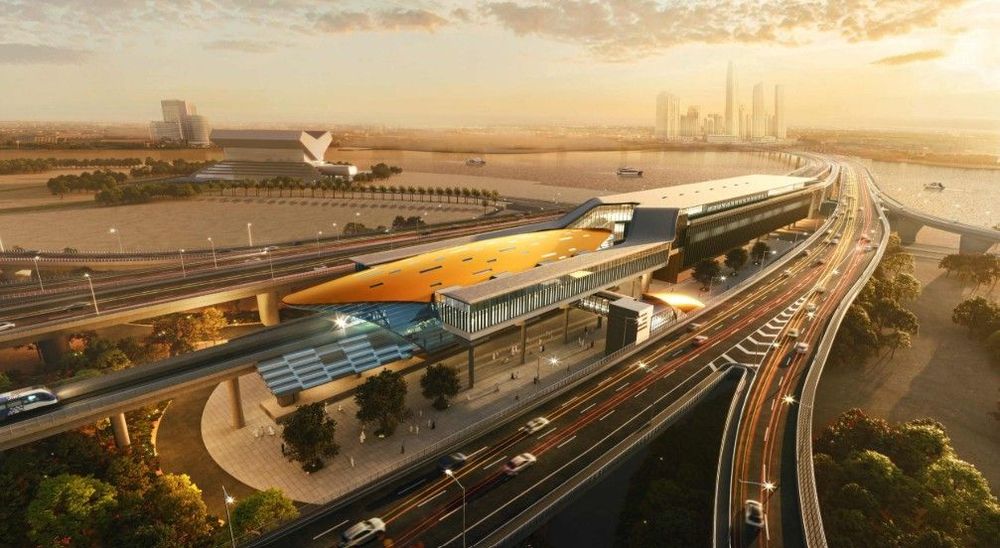
The newly announced Dubai Metro Gold Line will serve 15 locations across the city once it commences operations on September 9, 2032, connecting 55 mega developments that are currently under construction. From Al Ghubaiba to Dubai Production City, the underground metro line will stretch over 42 kilometres and touch 18 stations, connecting areas of the historic old Dubai with more urban communities of central Dubai and luxury destinations further south. As a result, connectivity will drive residential demand, fuelling supply growth, pushing investments, and bolstering value appreciation and rental yield in real estate.\n\nThe line will benefit over 1.5 million people by 2040, transporting 465,000 passengers daily beyond 2040. It will connect to both the Red and Green Lines, while integrating with Etihad Rail.
With Gold Line and Blue Line, which is being constructed, the Dubai Metro network will stretch 162 kilometres, expanding by 35 percent from current 120 kilometres.\n\nThe major announcement, which was made by Sheikh Mohammed bin Rashid Al Maktoum, Vice President and Prime Minister of the UAE and Ruler of Dubai, comes after a month of escalated geopolitical tensions that stalled operations across the country. This reflects the UAE’s revolutionary push for development and recovery and renewed investor confidence.
“Our major projects to build the world’s best city to live in are ongoing. Our future projects will not stop; rather, they will gather pace. Our mission is to build a better future for millions—for we are a people who say what we do and do what we say,” the Ruler of Dubai stated.
Fuelled by a massive investment of around Dh34 billion, the Gold Line is Dubai’s first fully underground metro line. By weaving across the emirate and strategically connecting with the existing lines, it will transform the network into the city’s major transportation artery. It will alleviate congestion on the Red Line between Burjuman and ONPASSIVE stations by 23 percent, Mattar Al Tayer, Director General and Chairman of the Board of Executive Directors of the Roads and Transport Authority (RTA) explained. Furthermore, its linkage with Etihad Rail will strengthen Dubai’s connectivity with the rest of the cities, offering an alternative, speedy solution for inter-country mobility.
Matthew Green, Head of Research at CBRE MENA, commented on the benefits of the new line, saying, “The newly announced Dubai Metro Gold Line is set to have a broadly positive impact on the Dubai economy and the real estate market, whilst also further supporting the Emirate's credentials as one of the world's leading cities for quality of infrastructure. Importantly, the new Gold Line and other ongoing extensions to the network, including the Dubai Metro Blue Line, will help to ease congestion, whilst also allowing commuters to more quickly and easily navigate the length and breadth of the city, joining up with existing transport networks, including the Dubai Metro Red and Green Lines.”
He also hinted at the possibility of price growth among homes close to the 18 stations on the Gold Line - a pattern observed in areas where the Blue Line is being built.
“Whilst pricing levels are clearly linked to multiple factors, including market cycle, property typology, and many other attributes, there has been a very positive appreciation in values in high density locations like Dubai Silicon Oasis since the Blue Line announcement in 2023, with average apartment prices across a basket of ready properties rising by around 40 percent since. In comparison Business Bay and Downtown have grown around 20 percent during the same period,” he stated, emphasising that improved transportation infrastructure is one of the factors that influence property prices.
On the other hand, price jump in luxury communities like Tilal Al Ghaf (TAG) and Jumeirah Golf Estates (JGE) is expected to be noticeably lower due to the current metro user demographic, Green concluded.
As the most popular form of transportation in Dubai, Dubai Metro has served over 2.8 billion passengers since its inauguration in September 2009 and until the end of 2025. Last year, it carried 295 million passengers, marking a seven percent increase compared to 2024. The Dubai Metro accounts for 40 percent of all public transport use across the emirate, with an average of one million users riding it daily.