
UAE hospitality sector gears up for upward trajectory despite tensions
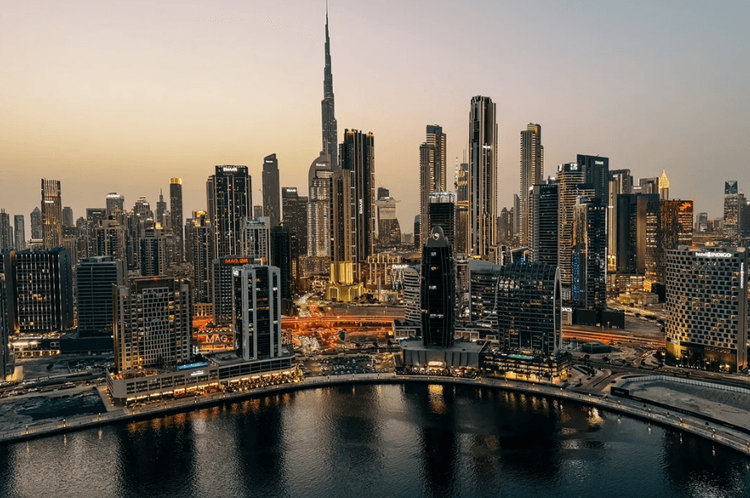
The hospitality industry, one of the UAE’s most impressive economic drivers, was on the frontline to bear the brunt of the regional crisis. Restrictions imposed on international travel, limited flight operations and a sharp drop in tourist arrivals impacted the industry’s performance when it was basking in the success of a record-high 32.34 million guests and Dh49.21 billion revenue collection in 2025.
The hospitality industry, one of the UAE’s most impressive economic drivers, was on the frontline to bear the brunt of the regional crisis. Restrictions imposed on international travel, limited flight operations and a sharp drop in tourist arrivals impacted the industry’s performance when it was basking in the success of a record-high 32.34 million guests and Dh49.21 billion revenue collection in 2025.
A half-yearly report by real estate consultancy Cavendish Maxwell revealed that occupancy levels in Dubai dropped 30.3 percent annually from H1 2025 to an average of 56.4 percent in H1 2026. Luxury and upper midscale properties experienced a steep decline with a little above 50 percent occupancy, while mid-market hotels remained comparatively immune to the effects of the crisis.
“The relative resilience of mid-market hotels reflects their broader demand base, including domestic, regional and corporate travellers, which provided a degree of insulation during the period. Premium hotels, by contrast, are typically more dependent on international leisure demand and higher-spending travellers, making them more sensitive to disruptions in air connectivity, travel confidence and discretionary spending. This exposure amplified the impact of regional disruption on their performance,” the report read.
While several landmark hotels temporarily paused operations due to renovations and reduced occupancy levels, staycation deals supported the industry during testing times, attracting domestic market. This ameliorated the occupancy drop, narrowing the year-on-year decline since April 2026.
The report is optimistic about the rest of the year, with business tourism picking up September onwards along with restoration of flights and inflow of international traffic.
“Dubai's hospitality market is expected to recover gradually over the remainder of 2026 as regional conditions stabilise, and international air connectivity improves. By year-end, hotel occupancy is forecast to range between 60.4% and 66.2%,” it said.
Meanwhile, Abu Dhabi performed relatively better than its neighbour. Occupancy averaged between 63-69 percent, bolstered by cultural and experiential offerings and access to new destinations by Etihad Airways.
Occupancy in Ras Al Khaimah fell below half, stalling at 49.3 percent. The emirate welcomed record-setting 670,000 visitors, a marginal 2.4 percent growth from 654,000 in H1 2025. Domestic tourists accounted for the industry’s sustenance, while ongoing works at Wynn Al Marjan Island and a pipeline of 6,000+ keys renewed confidence in the sector’s long-term growth.
As the overall sector is set to see recovery in the second half of 2026, hotel chains and management companies are re-energising operations to meet the demand. Regardless of the uncertainty looming in the region, UAE-based hospitality groups are already gearing up for an eventful future characterised by an upward trajectory. They have announced ambitious pipelines while navigating a period of uncertainty, expressing confidence in the industry’s readiness to weather crises and swiftly rebound to normalcy. On the other hand, several international companies are preparing to grow their base in the UAE, indicating the industry’s evergreen appeal.
Following are the hospitality companies that have curated culturally-resonant stays that range from luxury to midscale. Several others have invested in offerings that are uniquely Arabian. Whether it is the sand-dunes inspired interiors, the distinct fragrance of oud or the free-flow of gahwa and dates, companies are adopting concepts that reflect Arabian hospitality.
• Hospitality Management Holding (HMH)
Established in 2003, Hospitality Management Holding (HMH) was once of the country’s largest chains in the dry segment. As a dry hotel, the property does not sell, serve or provide alcohol within its premises. HMH’s portfolio features seven operational properties, with four in the UAE and the rest in Saudi Arabia, Jordan and Sudan, altogether encompassing over 1,300 keys. A pipeline of three are upcoming.
HMH comprises five brands, each catering to a different segment. Bahi is its five-star offering, while Coral Resorts curates a four-star, beach-access experience for families. Its business hotel is branded under Corp, while Ewa is composed of hotel apartments. The chain’s latest brand Ecos has been launched to offer a three-star, lifestyle-centric experience.
• Jannah Hotels & Resorts
Developed to emulate Bedouin hospitality, Jannah Hotels and Resorts is a 13-year-old dry brand with footprint in Dubai, Abu Dhabi and Ras Al Khaimah. The six-property portfolio features five-star accommodation, hotel apartments and beach villas.
Each property reflects Arabian culture and its values. Visitors can enjoy the warmth of oud and a generous flow of gahwa and dates during their stay.
Jannah’s presence in the UAE is bolstered by two hotels in Abu Dhabi, three in Dubai Marina and a collection of beach-side villas in Ras Al Khaimah. Accommodation options range from villas and hotel apartments to studios and one- and two-bedroom units, taking the total keys to over 1,000.
The brand plans to scale its operations beyond the UAE, starting with expansion in Saudi Arabia. In the next three to five years, it is targeting to double the number of properties.
• Azizi Hospitality
The hospitality division of Azizi Developments, one of the UAE’s leading developers building the world’s second tallest tower Burj Azizi, has announced an ambitious pipeline of 151 hotels in the UAE, most of which will be located in Dubai. Azizi Hospitality will pump Dh75 billion worth of investments to deliver approximately 60,000 room keys and create more than 75,000 jobs.
Out of the targeted 151 properties, 100 are four-star and 50 are five-star hotels. A seven-star development will be built within Burj Azizi.
Azizi ventured into hospitality in March 2026 with the launch of a five-star hotel in its masterplan community Azizi Riviera in Meydan. It has recently announced to develop another five-star property in the same community.
• Arada Hospitality & Entertainment
Prominent UAE developer Arada has combined hospitality and entertainment to curate a roster of offerings, including hotels and resorts, purpose-built student accommodation (PBSA), food and beverage brands and family-focused entertainment. Its hospitality portfolio is bolstered by a pipeline of nine hotels and resorts encompassing 1850+ keys.
The combined investment value across Arada’s hospitality and entertainment division stands at Dh35 billion.
Key operational assets include the 395-room Nest Hotel and Nest Campus, comprising 3,073 beds across ten buildings, alongside the recently opened 175-room Vida Aljada, Arada’s first five-star hotel and the first Vida property in Sharjah, operated by Emaar Hospitality Group as well as 579 keys in the Vida Branded and Serviced Residence within the Complex.
Arada has partnered with brands and management companies, including Address, Anantara, Armani Hotels, W and Emaar Hospitality Group, blending international standards with culturally resonant hospitality offerings.
The company is strengthening its presence in Dubai with two developments: the wellness-centric Akala Hotel and Residences and Inaura Residences Downtown. It is also growing its international base in London with five student accommodation schemes across four London boroughs, comprising a total of around 3,000 beds, with completion planned between 2028 and 2031.
• Shaza Hotels
Launched by Kempinski in 2010, Shaza Hotels brings Arabian hospitality to halal-conscious investors and travellers. Although it boasts a strong footprint in Saudi Arabia, Bahrain, Oman and Qatar, it is yet to foray into the UAE, with negotiations ongoing for openings this year.
The brand has built its identity around contemporary luxury inspired by the traditions of the Silk Route. Its debut project was announced in the holy city of Madinah in Saudi Arabia, which was developed in tune with the city’s religious importance.
Shaza Hotels has ventured into the upscale segment with its brand Mysk that caters to a younger demographic seeking lifestyle-oriented hospitality. Mysk presently operates in Oman, Bahrain and Saudi Arabia.
With a current portfolio of six properties comprising 1,700 keys in the GCC valued at roughly US$1 billion, Shaza is looking ahead to open up to 18 hotels that span beyond the GCC and locations along the historically significant Silk Route, such as Central Asia, Turkey, Morocco and Egypt.
By 2030, the brand will grow to 30 properties worth between US$800 million to US$1.1 billion, out of which at least 20 are expected to be operational. A total of 4,000-5,000 keys will define the portfolio’s expansion.
• United Hospitality Management (UHM)
With over 36 properties worldwide, out of which six are positioned in Dubai, United Hospitality Management (UHM) is a global management company that serves as a bridge between hotel owners and brands. In addition, it manages luxury and upscale properties featuring over 3,500 rooms, and intends to grow to 100 hotels by 2030. The company has managed to meander through peak tensions following an effective PPP (profit protection plan), recording zero terminations and maintaining positive performances by reducing operational costs. Following the ease of tensions, some of its properties recorded 90 percent occupancy on the weekends, indicating recovery.
Ends