
Foreign developers rely on experience and innovation to thrive in UAE real estate
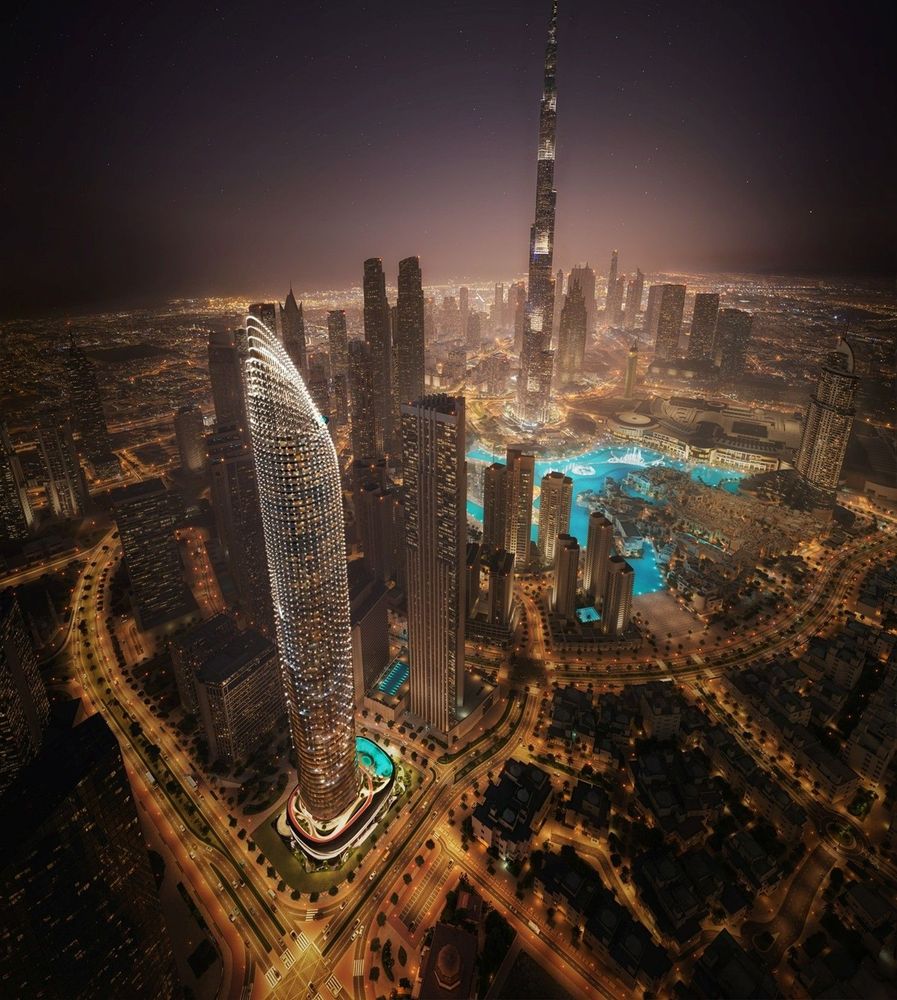
As the frontrunner of the UAE’s realty scene, Dubai appeals to foreign developers thanks to its robust business infrastructure.
The UAE has relentlessly proved its mettle as an economic powerhouse during every crisis. Real estate, particularly, has proved its driving seat role at every trough of the economic cycle, driving momentum and attracting capital. The last case was the regional uncertainty that seeded doubts beyond borders. Yet, the industry kept moving with caution as launches stalled and developers shifted their focus to deliveries.
In H1 2026, Dubai completed 104 projects - a 38.7 percent increase from 75 in H1 2025. The completed projects fetched a valuation of Dh111 billion, exhibiting 52 percent jump from Dh73 billion in the corresponding period last year. As a result, supply also experienced a boost. The number of new units surged over 36 percent to 24,537, compared to 18,043 during the first half of last year. These figures demonstrate that companies recalibrated strategies to increase deliveries.
Meanwhile, Abu Dhabi recorded transactions worth Dh117 billion-up 112 percent year-on-year. As many as 16,838 sales transactions valued at Dh86.1 billion were achieved during the period.
The Dubai Land Department announced that 186 developers launched themselves between January and mid-August this year, indicating that the market received new entrants amid the geopolitical crisis. The UAE’s resilience and innate capacity to rebound after every calamity is a fundamental factor for new developers, particularly foreign ones that already have an established portfolio overseas.
Competition influences a developer’s strategy
By default, local developers dominate the UAE real estate market. Foreign companies are inevitably compelled to showcase variety to stand out among their peers.
Felicia Agmyren, founder and managing partner, Rex Real Estate, pointed out that intense competition will compel developers to strengthen their capabilities, from design and service to delivery. In Abu Dhabi, local heavyweights have their own gameplan; however, the smaller entrants can attract attention by serving their niche markets.
“Competition makes everyone level up - on design, service and delivery. Obviously, no one will match the scale of Aldar or Modon overnight, but they don't need to do that specifically as long as they have an established track record and plenty of experience to help elevate the real estate product,” Agmyren stated.
“Whilst the local giants are strong, there is no single developer that can answer every buyer's brief, and nothing refines a product more than good competition.
“The newcomers who will thrive are those who arrive with a genuine point of view on design, product and lifestyle, and ideally strong developer experience that they bring with them, as well as a good showcase of what they’ve done elsewhere,” she added.
Sufficient knowledge is crucial to stand out among the thousands of developers across the country. Identifying target markets, choosing apt locations and building projects that offer valuable ROI expose the developer’s understanding of the industry.
“Many of them operate in large markets with fierce competition on a level playing field, and they have stood out there,” Ben Crompton, managing partner, Crompton Partners said.
“The harder part will be everything around the product. Contractors, financing, the approvals process and even the buyer mix will all be unfamiliar to them. Those hurdles are workable, but they take time and local knowledge. The developers who get past them should be able to deliver a very competitive product.”
Developers, too, echoed similar sentiments.
Blagoje Antic, chairman, CEO and founder of DHG Group, said, “Entering a new market requires adapting established development practices to local regulations, construction requirements and buyer expectations.”
“Understanding Dubai's fast-moving property market, working within local development frameworks and building relationships with experienced industry partners were important considerations,” he mentioned on planning the company’s foray into the UAE.
DHG Properties, the property development arm of DHG Group, is a Swiss developer with over three decades of experience and a portfolio of 300+ delivered projects in Switzerland, Serbia and the UAE. It set up its operations in Dubai in 2022 with Helvetia Residences in JVC that was delivered past October. Its current UAE pipeline is valued at around Dh1.3 billion comprising three residential projects.
Experience and innovation add value
“International developers bring valuable experience from different markets, including diverse construction methodologies, fresh perspectives on design, and established approaches to project management and community planning. This experience adds tremendous value to Dubai’s real estate sector,” Ruslan Yembergenov, CEO of BI Group UAE, said.
The Kazakhstan-based development and construction company BI Group is progressing with a pipeline of over 700 units across three of its Meydan Horizon projects. Since its entry late 2024 in Dubai, the real estate conglomerate has implemented an integrated model covering design, engineering, construction and asset management. It bears more than 30 years of experience in large scale development.
“Our main advantage is the scale of our construction experience and the level of control we maintain throughout the development process. With more than 30 years in the industry, we have established systems that allow us to manage complex projects efficiently while maintaining consistent quality standards.
“Another defining feature of our development model is our focus on large, integrated residential districts. This approach is reflected in our three upcoming developments, which have a combined allocated Gross Floor Area (GFA) of 116,171 square feet. Our master-planned communities bring together homes, public spaces, landscaping, education, retail, services and community infrastructure,” Yembergenov elaborated.
DHG Properties combines Swiss-quality construction with disciplined execution and a long-term approach to development. It also adopts an end-to-end service approach to support homeowners throughout the property lifecycle, thereby strengthening its credibility. The delivery of Helvetia Residences within two years highlights the developer’s capability in the long run, Antic explained.
“The US$200 million development was fully sold before completion and delivered within two years, demonstrating our ability to execute successfully in Dubai's competitive market. Beyond construction, we are also expanding our offering through property management and hospitality-related services to support owners throughout the property lifecycle. As Dubai's market continues to mature, we believe developers with a proven delivery record, strong operational capabilities and a clear commitment to quality will be better positioned for sustainable growth.”
As the frontrunner of the UAE’s realty scene, Dubai appeals to foreign developers thanks to its robust business infrastructure. Antic attributed DHG’s expansion beyond Europe to Dubai’s strong economic fundamentals, transparent regulatory environment and continued investment in infrastructure.
“The city's ability to attract international businesses, investors and residents has created sustained demand for quality residential developments, supported by long-term initiatives such as the Dubai 2040 Urban Master Plan and the D33 Economic Agenda,” Antic added.
Furthermore, the UAE’s relatively tax-free business structure also gives foreign companies a favourable ground for growth.
According to Crompton, “Most international developers look for markets that resemble their own, with favourable regulatory and commercial environments. The UAE will always be on the list because of its low tax burden.”
Assessing a developer’s credibility
Although it’s too early to judge the performance of overseas companies attempting to make a mark, experts advise buyers to assess the developer’s record before taking decisions.
“What reassures buyers is the framework: registered developers, escrow accounts and strong regulator oversight. My advice to clients is to look at a developer's completed projects, not just the launch event. The first wave of clean handovers will set the standard for everyone who follows,” Agmyren said.
Drawing comparison in the initial stages of operations would be too early, Crompton asserted. “Delivery, build quality and how they look after buyers once the keys are handed over will show how they compare with their more established local peers. Until then, any judgement would be premature.”
Regional crisis compels reconsideration of plans
Prior to the crisis, the market was witnessing momentous growth that somewhat stalled when tensions peaked. Consequently, companies who were preparing for expansion into the UAE had to reconsider.
“Capital dislikes uncertainty. We saw some overseas buyers hold back during the tensions earlier this year, and investing outside your country of residence is already a high hurdle without that added risk. Foreign developers will think the same way. They will want to see not only peace but a lasting agreement, and they may wait a considerable time to be confident it holds before committing,” Crompton said.
Despite the uncertainty, the market has performed better than expected as it undergoes recovery by appreciating towards pre-crisis levels. Activity is gaining ground, with developers resuming launches and construction advancing at a normal pace.
Fitch Ratings predicts a 15.1 percent GDP growth in 2027 in Abu Dhabi, Agmyren said in support of the capital’s real estate rebound. “Developers are still launching off plan with good results. You don't bring a flagship luxury project to Abu Dhabi unless you're thinking in decades, not quarters. We can tell from the new buyer demographic that are both moving and committing to Abu Dhabi for the long term that the future is here.”
Antic asserted that while times of uncertainty do make investors cautious and recalibrate decisions, DHG’s consistency was immune to the crisis. The market has emerged after every setback in the past, reinforcing long-term confidence.
“The UAE has consistently demonstrated its resilience and ability to navigate regional and global challenges, supported by its visionary leadership, economic diversification and long-term development strategies.
“Our decision to enter the UAE in 2022 was driven by these strong fundamentals and our belief in the country's long-term potential.”
2027 market predictions
As the market progresses into the new year, developers forecast greater activity albeit by increasingly discerning buyers.
“We expect 2027 to be a more selective year for Dubai's property market as new supply enters the market and buyers give more importance to value, quality, and developer track records,” Yembergenov predicted.
“We see continued potential in the affordable luxury and premium residential segments, particularly in well-connected communities and emerging destinations supported by infrastructure development. Ultimately, we believe the next phase of market growth will favour developments that combine quality, functionality and long-term liveability, rather than relying solely on short-term investment momentum,” Antic concluded.
Ends