
Experts discuss migration shift and strong FDI driving real estate momentum at IREIS
The UAE real estate market continues its growth trajectory, with stability anticipated in the near future, bolstering the country’s economic diversification efforts, experts said at the International Real Estate Investment Summit (IREIS) in Ras Al Khaimah. Factors such as global migration shift, foreign direct investment (FDI) inflows, and strong off-plan sales, are aiding in maintaining the real estate market’s momentum.
IREIS brought together leading investors, developers, and policymakers from around the world, marking a significant milestone in Ras Al Khaimah’s drive to establish itself as a premier global investment destination. Sheikh Khalid bin Saud bin Saqr Al Qasimi, Vice Chairman of the Investment and Development Office in Ras Al Khaimah, attended the opening day’s activities.
The summit comes at a strategic time marked by a surge in global real estate investment activity. According to estimates by leading international real estate consultancy firms, investment volumes are projected to grow by 27 per cent to reach US$952 billion by the end of this year, with expectations to surpass the US$1 trillion mark by late 2026.
In this context, the UAE stands out as a key destination for attracting these capital flows, having successfully drawn US$45.6bn in FDI last year - a 48.7 per cent year-on-year increase - with new real estate projects accounting for approximately 7.8 per cent of this total.
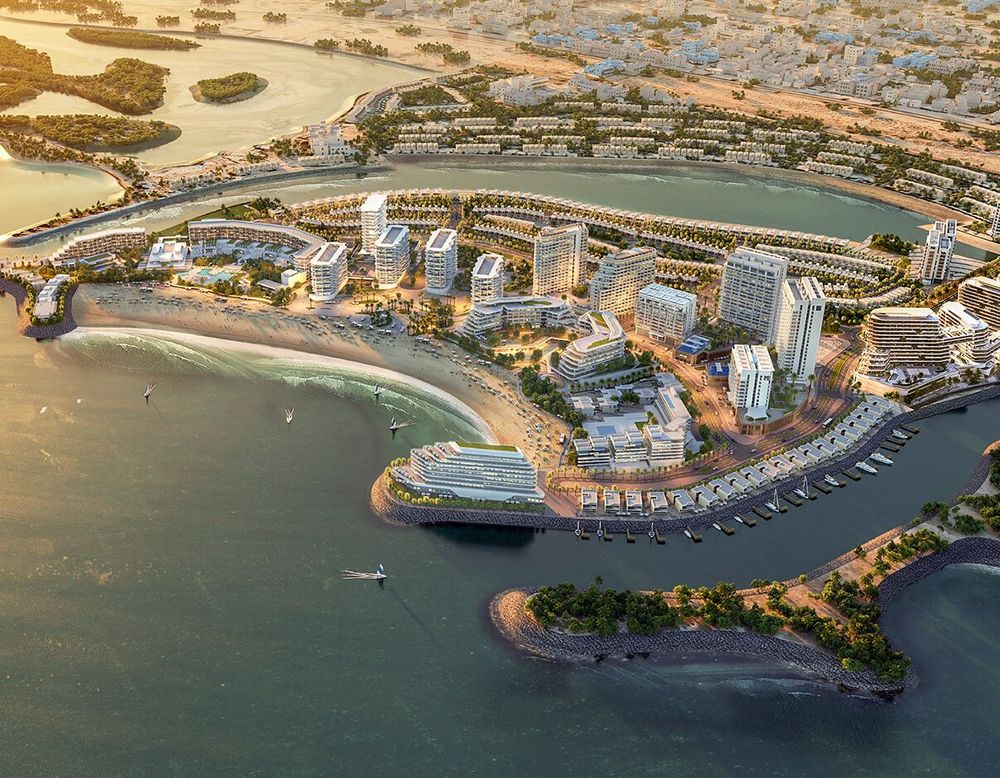
Amid this accelerated national momentum, Ras Al Khaimah continues to strengthen its position as a dynamic investment hub, fuelled by its landmark projects, forward-looking policies, and rise in international investments in Al Marjan Island, one of the emirate’s most prominent real estate development destinations.
Rajeev Sibal, Deputy Chief Global Economist at Morgan Stanley, addressed shifting geopolitical and economic conditions at the summit. Exploring trade dynamics, volatility in global markets, and emerging investment strategies suited to uncertain conditions, Sibal said that while his role as an economist dictates he must “see the glass half-empty because I need to look for what risks are ahead”, in contrast to the US economy where inflation is rising yet growth is slowing, he considers the UAE economy strong as it benefits from recent diversification.
“The UAE economy, unlike many of its peers in emerging markets, has actually diversified tremendously over the past five to 10 years,” he said. “One of the things often overlooked is that the mixed contribution to GDP in the UAE is actually very healthy - it's not a normal oil economy. That diversification has helped transform the UAE economy, giving it a certain amount of resiliency as the Fed uncertainty unfolds. Growth may slow down in the UAE, but it will be healthy for there to be a cycle here. The underlying structure opportunity here is actually very, very strong because of the diversification that now exists in the UAE economy. And that's why we continue to expect real estate to keep performing as an asset class.”
The summit also explored the role of real estate as a catalyst for economic diversification and long-term market resilience. James Joughin, Executive Director, Colliers, UAE, discussed current metrics and market resilience contribution to sustainable growth.
“If we look at the typical real estate metrics, they are all still green,” said Joughin. “But being a valuer by background, we're always looking for those warning signs, and one area we are starting to see amber lights is in the rental market, and where that is moving. But right now, generally, across the board, across many asset classes, the lights are green.
“Occupancy levels are very strong and sales for tier-one developers in good locations are still performing extremely well. But each emirate and each asset class is probably in a different part of the cycle. You can’t call when the UAE’s recent run will come to an end, but there is still a lot of positive sentiment in terms of what's happening in the market.”
Developers such as Deyaar and Aldar shared positive foresights. Saeed Mohammed Al Qatami, CEO of Deyaar, stated that market outlook relied on supply delivery. A good number of units are projected to boost the current supply in the next two years, particularly in the residential sector.
He further noted that while prices have increased since 2021, rental values of apartments saw slight stability in the last two months.
Ramy Zaghoul, Chief Development Officer-Aldar Investments, Aldar, emphasised the role of attractions as an impeller for real estate surge in Abu Dhabi. As one of the largest developers in Abu Dhabi, Aldar boasts a strong portfolio of projects in property hotspots like Saadiyat Island and Yas Island. Apart from its diverse residential portfolio, Yas Island is a regional household name for hosting some of the world-famous leisure destinations. Ramy attributes Yas’ flourish on the real estate map to the mega projects being announced, the last being Disneyland.
“Appreciation on Yas Island has quadrupled. Every announcement pushes capital into the real estate sector. Good flow of investments along with population growth will ensure a steady market,” he added.
Commenting on the success of the summit's opening day, Alexander Heuff, Cityscape Group Director, said, “It’s clear from the attendance, appetite for knowledge exchange, and insightful sessions delivered by some of the world’s leading economists, developers, and industry leaders, that the real estate industry in the UAE – and RAK in particular – is absolutely primed for innovation, investment, and growth. The first day of the IREIS Summit by Cityscape has immediately proven its stature as an ideal B2B platform to showcase the best investments, future economic forecasts, and networking opportunities for an industry that is going from strength to strength in a sustainable way.”
Ends