
Dubai's Waterfront Revolution: How Coastal Destinations Are Fuelling Economic Growth
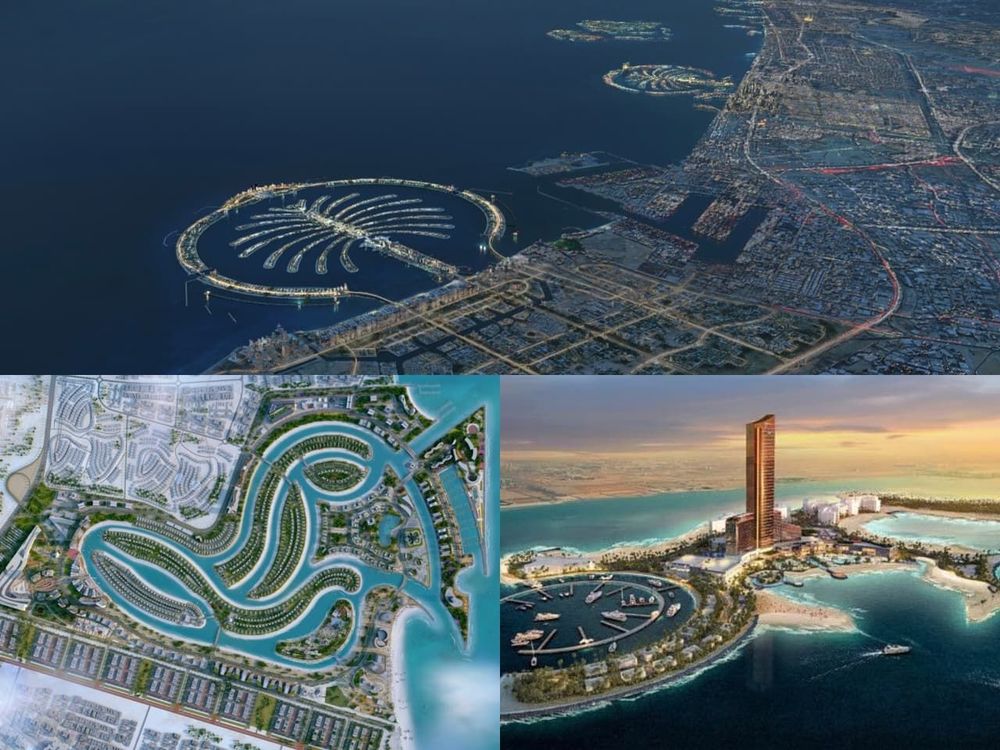
Sheikh Mohammed bin Rashid Al Maktoum, the Ruler of Dubai, once shared a memory from his younger years: while his friends built sandcastles on the beach, he tried to build them on the water, which amused them. "I now take them to see the Palm Islands," he later wrote on social media.
What started as a childhood dream has evolved into a powerful economic driver that is shaping Dubai's future. Buildings, homes, and structures are beginning to dominate the coastline of the emirate, from Palm Jebel Ali to the Dubai Islands, with the Arabian Gulf serving as a catalyst for multi-billion-dollar developments. However, Dubai, the traditional desert metropolis, is spending so much money on the sea, and a basic question arises: why?
It's more than just an ambitious real estate play; it's a well-crafted economic plan. The aim is to create a global mega city that attracts global investments, creates high value employment, and preserve Dubai on the global map for generations to come.
From Sandcastles to Global Icons, Dubai's waterfront is a vision that has taken decades to come to fruition. The idea of a man-made island was met with a lot of scepticism when construction of Palm Jumeirah started in 2001. Reflecting on this journey through social media, Sheikh Mohammed once noted the importance of conviction: "We must have a clear and unified vision for the future. "That vision is now completely fulfilled. Palm Jumeirah has now become a symbol of Dubai's "can do" attitude and the ultimate model for luxury seaside resorts. The city's next chapter is now underway and the scale continues to grow. Approving the master plan for Palm Jebel Ali, Sheikh Mohammed emphasised that the project "will further strengthen our urban infrastructure," adding, "We have vast ambitions for the future, and we are confident that we can transform our grand vision for development into reality."
The Lucrative Case of Waterfront Investment
The numbers don't lie: coastal real estate makes for a compelling story. According to a report by Wellington Developments, a Dubai-based developer, the apartments of Palm Jumeirah appreciated by more than 90-120 percent, from Dh1200 per square foot in 2020 to Dh2600-2800 per square foot by 2025. The prices of prime villas on the Palm rose even higher, jumping 100-150 percent to reach Dh5,000-6,100 per square foot during the same time frame.
In comparison, mid and inner market locations such as Jumeirah Village Circle (JVC) provide more affordable access points, with average apartment values at around Dh689,000, and have seen much more moderate growth rates. In the wider market, the average price of a property in Dubai is hovering around Dh2.5 million and is on a steady upward trajectory into 2025 and 2026.
The same can be said about rental yields. According to Khaleej Times, compared to other global safe havens, such as London or New York, where net yields are typically less than half, Dubai Marina consistently outperforms them, with a net yield of 6-7 percent per annum. New ventures such as Dubai Islands are even more profitable, at 5-7 percent for long-term rentals and at 7-10 percent in the booming short-term holiday rental market.
Economic Engines by the Sea
These coastal master plans have a far-reaching impact beyond the portfolio of private investors. Dubai's real estate transaction value in the beachfront projects was an overwhelming percentage of the total in the past year.
According to Gulf News, In the first quarter of 2025, Palm Jebel Ali led the market with more than Dh11.3 billion worth of transactions, as per market data from Wellington Developments. Dubai Maritime City (Dh5.2 billion), Dubai Marina (Dh4.93 billion), and Dubai Islands (Dh4.86 billion) all rounded up a stellar coastal display.
"Beachfront developments integrate seamlessly with the hospitality sector, luxury hotels, fine dining, and entertainment, making them a primary hub for real estate tourism,\" noted Syed Reza, General Manager of Wellington Developments. "Visitors who arrive as tourists frequently transition into homeowners or business founders, creating a powerful multiplier effect across the broader economy."
The linkage is a fundamental of macroeconomic stability in the emirate. As Sultan Ahmed Bin Sulayem, Group Chairman and CEO of DP World, has repeatedly pointed out, the maritime economy is the cornerstone of the UAE's economy - Jebel Ali Free Zone (JAFZA) and Jebel Ali Port generate approximately 36 percent of Dubai's total GDP.
Beyond Dubai: A Waterfront Revolution Across the Emirates
Palm Jumeirah has set the standard for successful waterfront projects in the UAE, and Dubai's achievements have led to a series of ambitious initiatives in the waterfront areas of other Emirates. Other emirates saw the opportunity in the economic shift of coastline to prime real estate and tourist locations, and each took the model and applied it in a different strategic vision.
Yas Island marked the first of its kind in Abu Dhabi. Forbes reported that the island's world-famous theme parks saw over 38 million visitors in 2024 - an increase of 10 per cent on 2023. The value of property on the island may rise by up to 35 per cent on apartments and 25 per cent on villas as the Disneyland Abu Dhabi is expected to open by 2030 or 2031. Abu Dhabi has also proved that the artificial islands could be used for industries. The port would be constructed on reclaimed land of about 2.8 square kilometres and KEZAD (Khalifa Economic Zones Abu Dhabi) industrial zone would generate some 100,000 jobs, and 15 percent of Abu Dhabi's GDP excluding oil by 2030.
The emirate of Ras Al Khaimah has taken the waterfront vision to heart, with Al Marjan Island, a group of four islands covering some 2.7 million square metres. The highlight is the US$5.1 billion (Dh18.73 billion) Wynn Al Marjan Island resort, which will be the first commercial gaming operator in the Middle East when it opens in 2027. Gulf News reported that CEO Abdulla Al Abdouli of the company Marjan confirmed the island was readying itself for major expansion to make it possible for Ras Al Khaimah to host over 3.5 million tourists by 2030. On average, the Return on Investment (ROI) on Al Marjan Island is around 6 per cent, and the rent of one-bedroom apartment on the island begins from Dh42,000 per year.
The Dh25 billion Ajmal Makan City in Al Hamriyah is bringing the waterfront arena to Sharjah. The project covers more than 60 million square feet on eight man-made islands, and will house more than 60,000 residents. Green spaces, beaches and public realms will make up 60 per cent of the masterplan. Sultan Al Shakrah, CEO of Ajmal Makan Real Estate Development, told to the press that the project is designed as "a fully integrated, eco-conscious and self-sustaining city" powered by tidal generators and seawater systems. With Al Dana Island (1.7 million-square-foot man-made development with 376 luxury sea and mountain views villas), Fujairah has also hopped onto the bandwagon.
The achievements of these projects in the UAE reaffirm the UAE's status as a leader in waterfront development, and demonstrate that the UAE's bold vision for Dubai was not a fleeting experiment, but a model for economic development throughout the country.
A Vision for Generations
Dubai's leadership is focused on the long-term use of these developments. "The urban expansion that Palm Jebel Ali represents is a testament to Dubai's economic dynamism," Sheikh Mohammed stated during its unveiling. "It also signifies Dubai's exceptional outlook as a hub for talent and investment."
Mohammed Ibrahim Al-Shaibani, Chairman of Nakheel, described the mega-project as "unprecedented in magnitude and scale," designed to "capture the spirit, energy, and life of Dubai as a thriving, prosperous, and sustainable waterfront community."
Most importantly, Palm Jebel Ali is an integral part of Dubai 2040 Urban Master Plan, with a focus on sustainable infrastructure and public beach expansion. The Dubai Media Office says the project is designed for tomorrow, as it will be fully powered by renewable energy sources to provide 30 percent of its public infrastructure.
The Future Unfolds
This evolution from the coast is taking place rapidly from blueprint to reality. Over 80 luxury hotels and resorts have been planned in Palm Jebel Ali and the Dubai Islands, which became one of the fastest growing luxury communities in the region with Dh6.1 billion in sales achieved in the first half of 2025.
For prime waterfront communities, the annual growth was 12-15 percent in mid-2025. When launching this new wave of coastal expansion, Sheikh Mohammed noted: "Dubai has moved to a new stage of development, based on innovation and creativity, and we remain committed to making a better future for our people and for the world."
The leader who dreamed of building on water has turned a childhood dream into a multi-billion-dollar economic powerhouse, changing the geography and the economy of the modern world.