
Dubai realty inches closer to Dh1 trillion goal as it records all-time high of Dh917 bn transactions in 2025
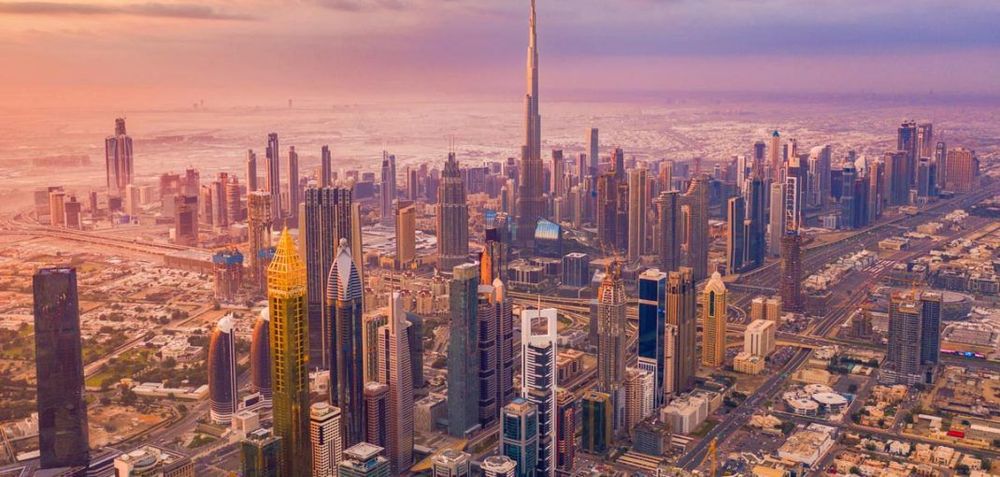
Dubai real estate has recorded more than Dh917 billion (US$249.7 billion) in value from 270,000 transactions the past year, marking appreciation of 20 percent from the annual collection in 2024. This makes the value higher than the gross domestic product (GDP) of 140 countries, reflecting the strength of the sector and its significance in bolstering the UAE’s economy.
Sheikh Mohammed bin Rashid Al Maktoum, Vice President and Prime Minister of the UAE and Ruler of Dubai, emphasised the strategic role of the real estate sector in Dubai’s diversified economy. He also highlighted that the sector’s record results reflect trust in Dubai’s vision, the resilience of its economy, and the clarity of its development path, underscoring the importance of careful planning, transparent regulations, and a balanced approach that supports progress while maintaining quality of life.
While Dubai has set an ambitious goal of achieving Dh1 trillion in transaction value by 2033, it seems highly likely that the emirate will reach its target before 2033 if it maintains its current pace.
Muhammad Yousuf Jafrani, Founder and Chairman of Amirah Developments, anticipated that the market will exceed the goal in the near future. “With total transactions reaching Dh917 billion in 2025, these fundamentals indicate strong momentum. Based on current trends, Dubai is on track to cross the Dh1 trillion annual real estate transaction mark within the next 1–2 years, potentially by 2027–2028, assuming continued policy support, economic diversification, and sustained international investor interest,” he said.
Sales, leases, and all real estate services contributed to 3.11 million transactions in 2025, seeing seven percent annual increase. Investments crossed Dh680 billion across 258,600 thousand deals, exhibiting yearly growth of 29 percent in value and 20 percent in number.
The investor count reached 193,100, increasing by 24 percent. Resident investors accounted for 56.6 percent of the total, while new investors reached 129,600, representing 23 percent jump. Investments by women also increased by 24 percent, contributing Dh154 billion through 76,700 deals.
Luxury real estate noted five percent surge in investments to Dh2.98 billion, thanks to the 86,000 high net worth individuals (HNWIs) residing in Dubai as per latest statistics. Moreover, near about 9,800 millionaires were expected to migrate to the UAE – the highest count globally in 2025 – according to a report by Henly & Partners, supporting the boom of premium developments.
The average period for a renter to become an investor was 4.8 years, highlighting the increasing attractiveness of property ownership in Dubai.
The top five areas that recorded maximum real estate transaction volume in 2025 were Al Barsha South Fourth, Business Bay, Wadi Al Safa 5, Dubai Airport City, and Dubai Marina. On the other hand, Business Bay, Dubai Marina, Palm Jumeirah, Burj Khalifa, and Al Barsha South Fourth, accumulated the most transactions in value.
In terms of the number of mortgage transactions, Al Barsha South Fourth led the list, followed by Dubai Marina, Jebel Ali First, Wadi Al Safa 5, and Burj Khalifa. The value of mortgage transactions was highest in Palm Jumeirah, Dubai Marina, Business Bay, Al Barsha South Fourth, and Burj Khalifa. This performance reflects the diversity of investment opportunities and the balanced geographical growth across the emirate.
Initiatives such as the First-Time Buyer Programme and fractional ownership through real estate tokenisation and real estate investment trusts (REITs) were crucial in supporting the sector’s record-breaking performance. They allowed the entry of a larger spectrum of buyers into Dubai’s real estate. While real estate tokenisation enabled limited earners to own fractions of real estate assets with as little as Dh500, the First-Time Buyer Programme made ownership accessible to first-time buyers through preferential pricing, flexible payments, priority access to new properties, and better mortgage deals from partner banks.
Ends